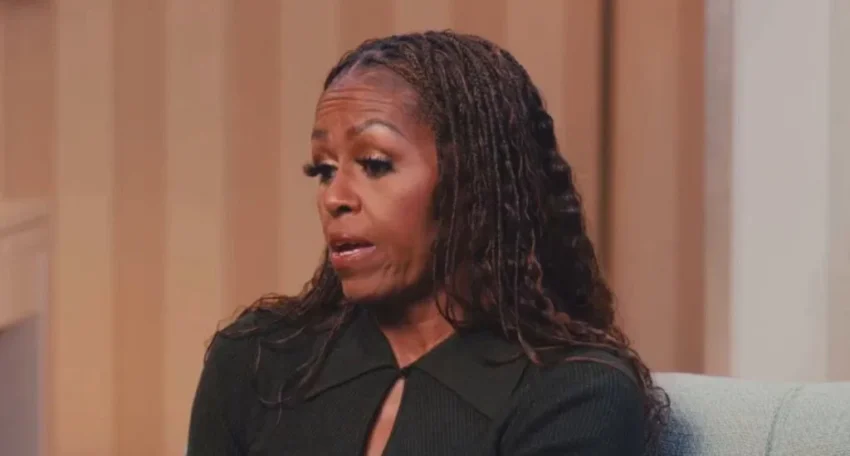
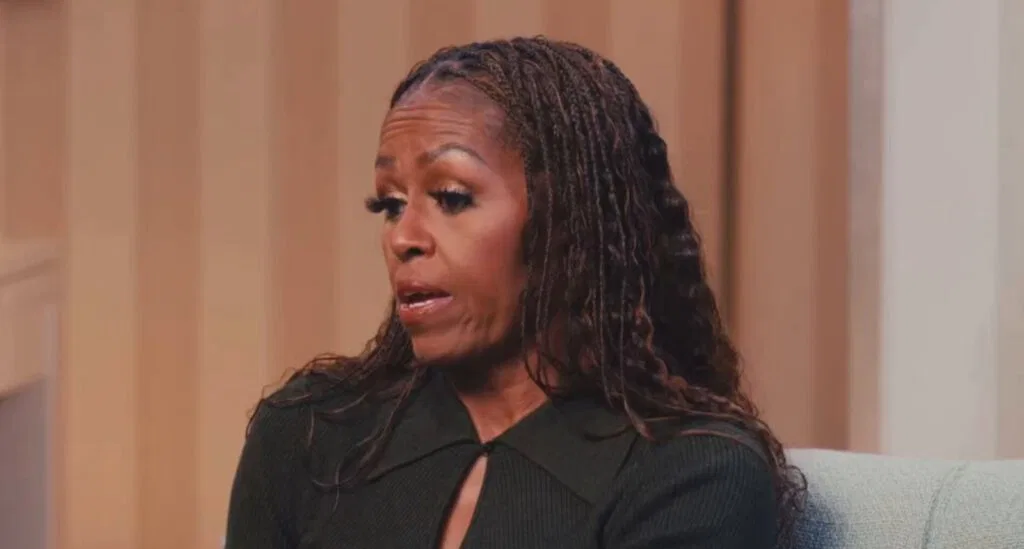
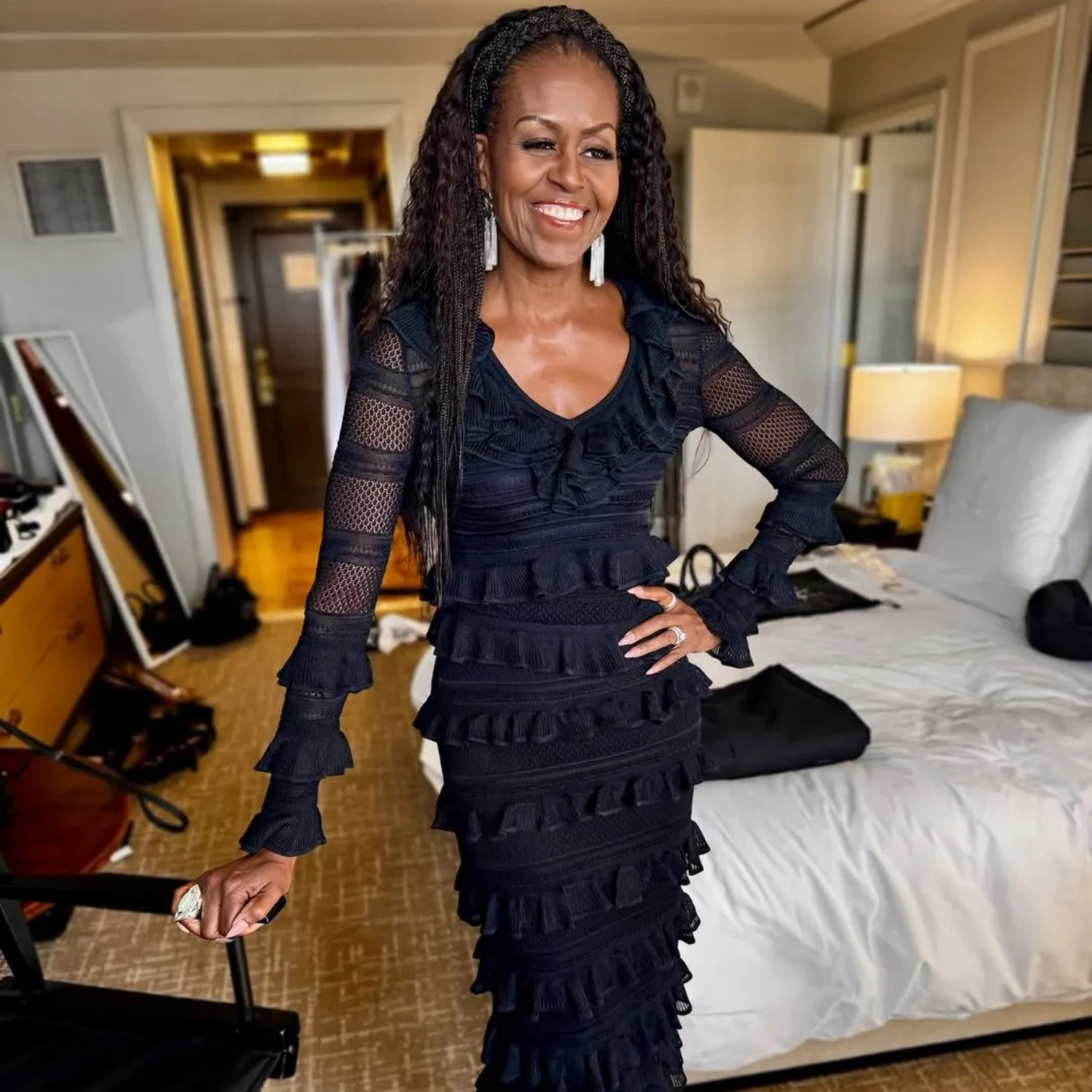
Former first lady Michelle Obama has frequently been called a racist by her detractors and others, and she appears to have earned that label once again. In a video that has since gone viral online, Obama claimed unabashedly that she tries to avoid buying clothing brands from white-owned companies.
“If I hear of someone whose fashion I like, and I hear they’re a person of color, I try to make it a point” to patronize them, she said during the discussion, which featured only black women. “You know, I think we can all do some work to think about that balance in our wardrobes. What does our closet look like, and who’s in it?
“Who are we supporting in it?” she added, as the other ladies nodded in approval and smiled. “I think if you have the money to buy Chanel, then you have the money to buy everybody.”
It’s not hard to imagine the outcry from the Democrat left if first lady Melania Trump had made a statement suggesting she patronized white companies over those owned by minorities.
In December, President Trump reposted a video from InfoWars host Alex Jones, who claimed that “Michelle Obama may have used Biden’s autopen in the final days of his disastrous administration to pardon key individuals.”
The claim, which has not been substantiated by any public evidence, suggested Michelle played a role in Biden’s final clemency decisions,. These controversial pardons included those issued for retired Gen. Mark Milley and Dr. Anthony Fauci, two of Trump’s fiercest critics.
Trump has repeatedly accused Biden of relying on the autopen — a mechanical signing tool used for official signatures — to push through late-term orders and pardons without oversight. He recently issued an executive action declaring any autopen orders not backed by proof Biden was aware of them as “null and void.”
Beyond the autopen speculation, Trump’s feed was filled with attacks on familiar political targets.
He railed against Sen. Mark Kelly (D-Ariz.), calling him “unpatriotic” for appearing in a video reminding service members they could refuse unlawful orders.
“Mark Kelly and the group of Unpatriotic Politicians were WRONG to do what they did, and they know it!” Trump wrote.
Other posts targeted California Gov. Gavin Newsom, Minnesota Gov. Tim Walz, Rep. Ilhan Omar (D-MN), former House Speaker Nancy Pelosi, former President Barack Obama, James Comey, and former Attorney General Eric Holder.
Trump also boosted a series of self-congratulatory videos. One featured Rep. Byron Donalds (R-FL) praising the president’s agenda, accompanied by a caption declaring Trump “the greatest president to ever live.” Another post, fitting the season, declared, “Christmas is officially great again,” paired with a still from Home Alone 2: Lost in New York — the 1992 film in which Trump made a brief cameo.
The president’s Monday night spree also included claims that former Biden Chief of Staff Jeff Zients and Hunter Biden were the “SECRET PARDON PUPPET MASTERS” behind the outgoing administration’s clemency wave. He accused Sen. Adam Schiff (D-CA) of “crimes against the country,” labeled Democratic veterans who criticized his military orders as “a threat to America,” and promoted a post calling Ilhan Omar “a terrorist from a terrorist family.”
In one of the night’s more provocative shares, Trump reposted an apparently AI-generated video depicting Elon Musk commenting on the administration’s pledge to revoke temporary legal protections for Somali migrants living in Minnesota.
That post came amid a Treasury Department investigation into reports that nonprofit groups in Minnesota may have funneled taxpayer money to terrorist networks abroad.
By sunrise Tuesday, the social media frenzy was still rippling through political circles, with supporters cheering the president’s energy and critics accusing him of amplifying “conspiracy theories.”
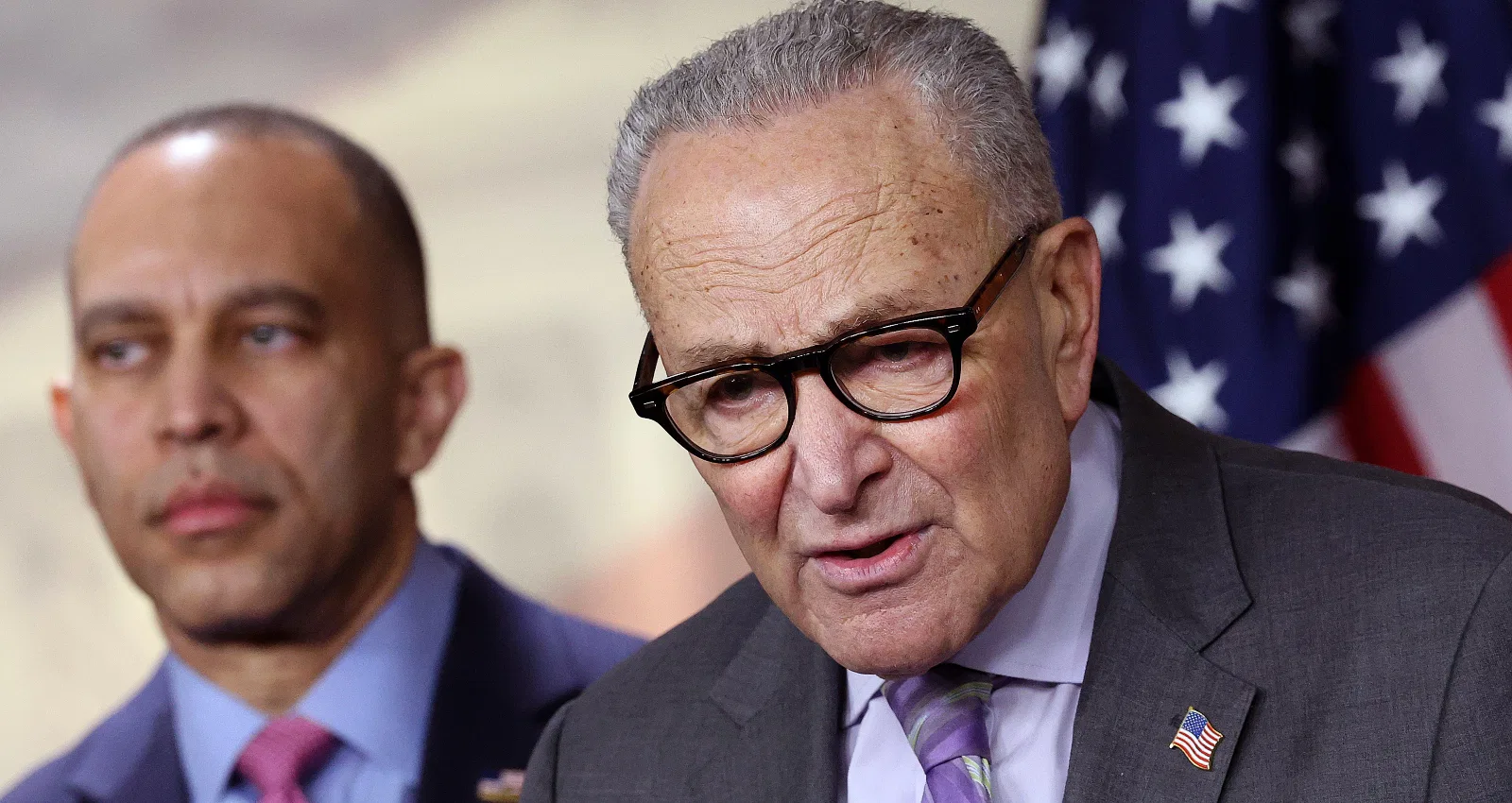
A Virginia judge on Tuesday ruled that a proposed constitutional amendment that would allow state Democrats to redraw the commonwealth’s congressional maps was illegal, a decision that dealt a setback to efforts to reshape district boundaries ahead of the 2026 U.S. House elections.
Tazewell County Circuit Court Judge Jack Hurley Jr. found that lawmakers failed to follow several procedural and constitutional requirements when advancing the amendment, including not meeting the required notice and publication deadlines and attempting to take up the measure during a legislative session not properly authorized for constitutional changes. As a result, he declared the amendment void.
The amendment, passed by both chambers of the Democrat-controlled Virginia General Assembly in January, would have put a mid-decade redistricting plan before voters that could have significantly increased Democratic representation in Congress. Opponents argued the process violated state law and constitutionally required procedures for amending the charter.
Supporters of the amendment said Republicans were seeking a favorable ruling by filing the lawsuit in a more conservative jurisdiction and vowed to continue fighting the decision. Both sides have indicated plans to appeal the judge’s ruling.
Virginians for Fair Elections, a campaign supporting the redistricting resolution, stated that an appeal is anticipated, the Washington Times reported.
“Republicans court-shopped for a ruling because litigation and misinformation are the only tools they have left,” campaign manager Keren Charles Dongo said. “We’re prepared for what comes next, and Virginians deserve both the right to vote and the chance to level the playing field.”
The ruling comes amid a broader, nationwide struggle over redistricting and mid-decade map changes in multiple states, with both parties using litigation and legislative strategies to influence the balance of power in the U.S. House of Representatives.
In a separate development, the Virginia Supreme Court has temporarily allowed a statewide referendum on an updated redistricting proposal to proceed in April while the legal battle over the measure continues, underscoring the ongoing uncertainty over how and when new maps will be adopted.
The court’s order reverses a lower-court decision that had previously blocked the plan on procedural grounds. By allowing the referendum to go forward, the high court has set the stage for voters to decide on whether to amend the state constitution to permit lawmakers to redraw the state’s congressional map.
Under the proposed plan, Democratic leaders say the new map could significantly increase their party’s share of Virginia’s 11 U.S. House seats, potentially flipping up to four Republican-held districts. Republicans have criticized the initiative as a partisan effort to undercut GOP representation and distort electoral outcomes.
The referendum is scheduled for April 21, and while the decision allows the vote to proceed, the broader legal challenge to the redistricting measure remains active. Opponents could continue to pursue appeals after the referendum.
The ruling underscores the intensifying national battle over congressional maps ahead of the midterm elections, where control of the U.S. House of Representatives is in close contention.
President Donald Trump in December celebrated the Indiana House’s redistricting vote and increased public pressure on several state senators to approve a new congressional map that could give Republicans two additional seats in the 2026 midterm elections.
Trump called the updated map “much fairer” and “improved,” congratulating Republican leaders in the Indiana General Assembly for passing the proposal earlier in the day, The Hill reported.
“It was my Honor to win Indiana six times, including Primaries, in 2016, 2020, and 2024, and this new Map would give the incredible people of Indiana the opportunity to elect TWO additional Republicans in the 2026 Midterm Elections,” Trump wrote on Truth Social.
“The Indiana Senate must now pass this Map, AS IS, and get it to Governor Mike Braun’s desk, ASAP, to deliver a gigantic Victory for Republicans in the ‘Hoosier State,’ and across the Country,” he said.
However, a handful of Indiana Senate Republicans refused to support the measure and it failed to garner enough votes to pass in January.