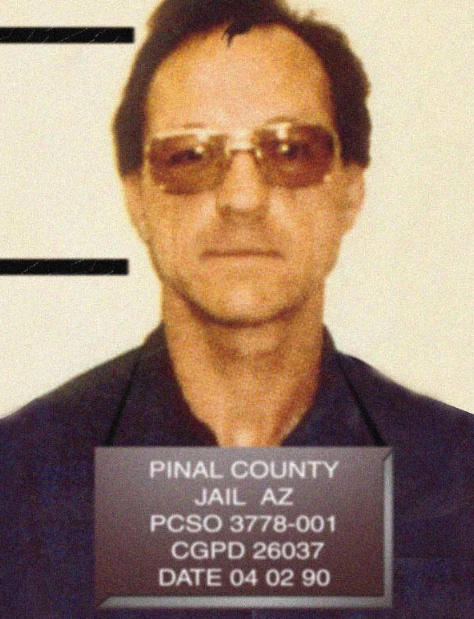
On April 1, 1990, a state trooper in Arizona pulled over to check on a parked tractor-trailer. It seemed routine—just another driver on the side of the road.
But what he discovered inside would change everything.
Chained in the cab was a young woman—naked, gagged, and terrified.
The driver, Robert Ben Rhoades, claimed it was a consensual situation. The officer didn’t believe him.
Rhoades was arrested on the spot.
At first, the charges were kidnapping and assault. But investigators would soon realize they had caught someone far more dangerous—a serial killer who may have been operating for years.
Robert Ben Rhoades was born in 1945 in Iowa and had a troubled past from an early age. He was repeatedly in trouble as a teenager and later dishonorably discharged from the Marines after a robbery conviction. His father had also been accused of abusing a child and died by suicide before trial—an unsettling background that seemed to echo in Rhoades’ own life.
By the 1970s, Rhoades had become a long-haul truck driver. The job gave him freedom, anonymity, and constant movement across state lines—conditions that allowed him to operate without drawing attention.
Authorities later believed that during those years, he kidnapped, tortured, and murdered dozens of women—possibly as many as 50.
His truck wasn’t just transportation.
It was a moving torture chamber.
Inside, investigators found a hidden compartment between the seats, handcuffs mounted to the ceiling, and a collection of chains, cords, whips, and other tools used to restrain and abuse victims.
What happened inside that truck was largely hidden from the world.
But the confirmed cases revealed enough.
In early 1990, Rhoades picked up a young married couple, Patricia Walsh and Douglas Zyskowski, who were hitchhiking. He killed the husband almost immediately.
But he kept Walsh alive for days.
Tortured her.
Repeatedly assaulted her.
Before killing her as well.
Their bodies were found in different locations, and it took years to fully identify them.
Not long after, Rhoades abducted 14-year-old Regina Kay Walters, who had been traveling with her boyfriend. The boyfriend was killed quickly.
Regina was not.
She was held captive for weeks.
Rhoades took photographs of her during that time—images that later became key evidence, showing her physical condition deteriorating.
He even called her father at one point, telling him he had cut her hair.
In the end, he killed her using a wire and dumped her body in a barn.
That case led to his conviction in 1994 and a life sentence.
But even then, the full extent of his crimes remained unclear.
While in prison, Rhoades began confessing to additional murders. Some of these cases were not prosecuted until more than 20 years later.
Despite only being convicted for a few murders, investigators believe the true number of victims is far higher. By comparing his trucking routes with missing persons reports over more than a decade, authorities suspect he may have killed dozens—possibly up to 50 women.
A pattern hidden in plain sight.
A killer constantly moving.
Always one step ahead.
Yet among the darkness, there was one rare exception.
In 2015, police released an old photo found among Rhoades’ belongings—believing the young woman in it was another victim.
But she came forward.
Her name was Pamela Milliken—and she was alive.
She had once hitchhiked into Rhoades’ truck and survived. He had taken her photo, but later let her go.
One of the very few who escaped.
For many others, there was no escape.
Today, Robert Ben Rhoades remains behind bars in Illinois, serving multiple life sentences with no chance of parole.
But the questions remain.
How many victims were never found?
How many families are still waiting for answers?
And perhaps most unsettling of all—
How long did he travel those highways… unnoticed?