Two Chinese nationals have been charged with acting as agents of the People’s Republic of China’s government
Accused of gathering intelligence on U.S. Navy personnel and bases while recruiting other military members to work for China’s primary foreign intelligence agency, the Ministry of State Security (MSS).
The Department of Justice announced that Yuance Chen, a resident of Happy Valley, Oregon, and Liren Lai, who entered Houston on a tourist visa in April 2025, were arrested. Both face charges related to conducting covert intelligence operations in the U.S. on behalf of the MSS.
In addition to recruiting potential MSS assets and collecting sensitive information on service members and military installations, the two men are also accused of facilitating a “dead drop” cash payment on behalf of the MSS.
The FBI arrested Chen in Happy Valley and Lai in Houston, with assistance from the Naval Criminal Investigative Service (NCIS).
“Today’s arrests reflect the FBI’s unwavering commitment to protecting our national security and safeguarding the integrity of our military,” FBI Director Kash Patel told Fox News.
“The individuals charged were acting on behalf of a hostile foreign intelligence service — part of the Chinese Communist Party’s broader effort to infiltrate and undermine our institutions,” he continued.
“Thanks to outstanding coordination with our partners, including NCIS, we disrupted those efforts and sent a clear message: the United States will not tolerate espionage on American soil. Our counterintelligence operations remain focused, vigilant, and relentless,” he added.
According to a criminal complaint filed in the Northern District of California, the DOJ stated that the government of the People’s Republic of China conducts intelligence operations against the U.S. through various channels, including the MSS, which handles intelligence gathering on civilians as well as foreign intelligence, counterintelligence, and political security.
The complaint further alleges that Lai recruited Chen to serve the MSS in 2021, Fox reported.
In January 2022, the two men were in Guangzhou, China, where they reportedly coordinated a dead-drop payment of at least $10,000 on behalf of the MSS. The operation involved collaborating with accomplices in the U.S. to stash a backpack containing the cash in a day-use locker in Livermore, Calif., Fox continued.
After the cash drop, Lai and Chen continued their work for the MSS, assisting in identifying Navy personnel who might be willing to collaborate with the agency.
The DOJ reported that in 2022 and 2023, the two visited a U.S. Naval facility in Washington State and a Navy recruitment center in San Gabriel, California.
At the recruitment center, Chen allegedly photographed a bulletin board displaying the names, programs, and hometowns of Navy recruits. Most of those listed had “China” noted as their hometown, and the DOJ claims the photos were transmitted to an MSS intelligence officer in China, the Fox report continued.
The DOJ also alleged that the MSS instructed Chen on what to say to potential recruits regarding payments, preferred Navy job assignments, and ways to reduce the risk of Chen being exposed.
According to the complaint, Chen eventually communicated with a Navy member via social media and arranged a tour of the USS Abraham Lincoln in San Diego with that individual. Chen reportedly sent information about the Navy employee back to the MSS.
The complaint further alleges that Chen traveled to Guangzhou in April 2024 and March 2025 to meet with MSS intelligence officers and discuss compensation for specific assignments, Fox said.
Lai allegedly traveled to Houston in April 2025, stating that the trip was for his online retail business and that he planned to stay for two weeks.
Both Chen and Lai have been charged with acting as agents of a foreign government in the U.S. without notifying the Attorney General. If convicted, they face fines of up to $250,000 and up to 10 years in prison.
President Donald Trump requested the resignation of the Pentagon’s third-ranking official, prompting the departure of Under Secretary of Defense for Policy John Rood. The Pentagon and the White House did not provide a public explanation for the decision.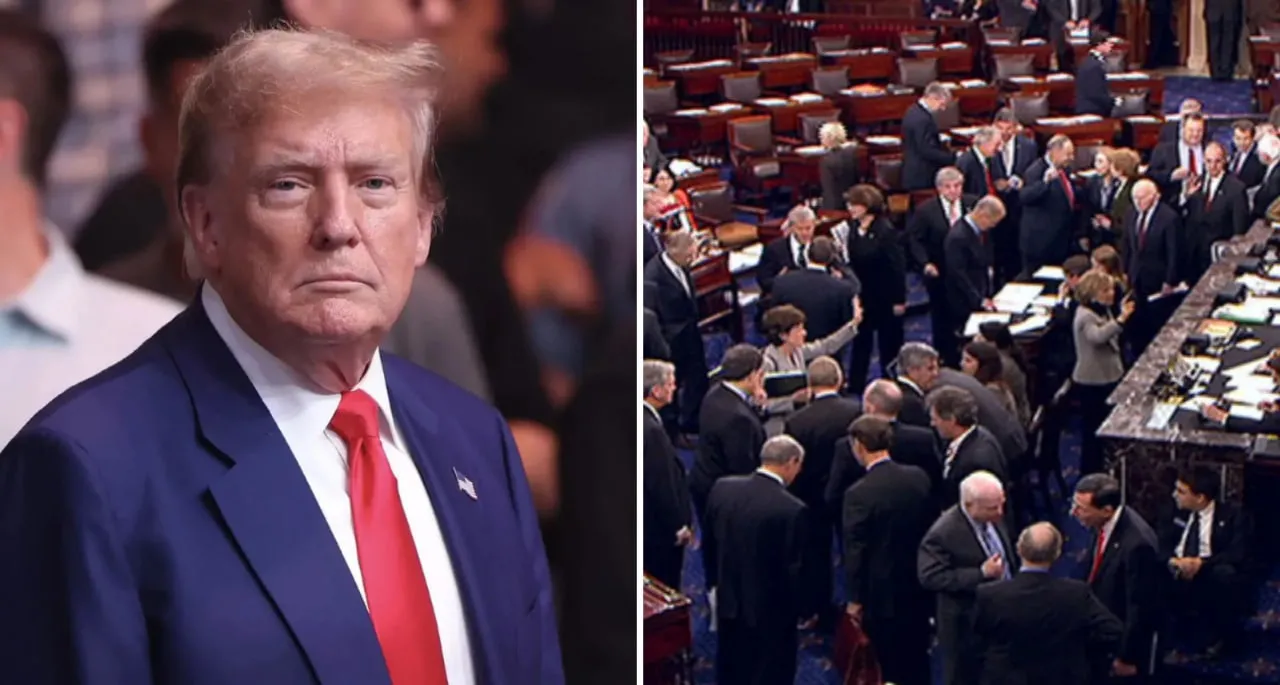
Rood assumed the role in January 2018 under then Defense Secretary Mark Esper after previously serving in senior national security positions across several administrations, ABC News reported. In a resignation letter dated Feb. 19 and addressed to the president, Rood confirmed that the request for his departure came directly from the White House.
“It’s my understanding from Secretary Esper that you requested my resignation from serving as Under Secretary of Defense for Policy,” Rood wrote. “Senior administration officials appointed by the President serve at the pleasure of the President, and therefore, as you have requested, I am providing my resignation effective February 28, 2020.”
Trump later acknowledged the resignation publicly. In a tweet on Wednesday, the president thanked Rood for his service and wished him well in future endeavors.
Rood became connected to the impeachment inquiry involving the president after he certified to Congress in May that Ukraine had made “sufficient progress” on defense and corruption reforms to receive $250 million in U.S. security assistance.
The aid was later withheld by the White House. The Government Accountability Office later concluded the delay violated federal law.
During impeachment hearings, administration officials testified that the aid was allegedly tied to a request that Ukraine investigate former Vice President Joe Biden and his son Hunter.
Rood told reporters in December that he became aware the assistance had been delayed “significantly after May.”
He said he “never received a very clear explanation” for the hold on the funding.
Pentagon spokesman Jonathan Hoffman dismissed speculation that the resignation was related to the Ukraine matter.
“I have no information that would lead me to that conclusion,” Hoffman said during a Wednesday briefing.
Hoffman also declined to say whether Defense Secretary Mark Esper recommended Rood’s removal. A defense official told ABC News that Rood’s departure should not be linked to the impeachment inquiry.
Another former official said the resignation was more likely tied to policy disagreements over issues including Syria, North Korea, Iran and Ukraine.
Rood’s leadership style had also drawn criticism inside the department.
Foreign Policy reported in December that current and former officials blamed him for contributing to a toxic work environment and an exodus of senior staff.
Esper praised Rood’s service in a statement released by the Pentagon.
“I would like to thank John Rood for his service to the Department,” Esper said.
“John has played a critical role on a wide range of DoD issues including modernizing our nuclear deterrence capability, efforts to increase burden sharing by our NATO allies, our Missile Defense Review and implementing the National Defense Strategy,” he said.
“I wish him all the best in his future endeavors.”
Pentagon press secretary Alyssa Farah said James Anderson will assume Rood’s responsibilities until a permanent replacement is nominated by the president and confirmed by the Senate.
Anderson currently serves as the senior official performing the duties of the deputy under secretary of defense for policy.
Rood said in his resignation letter that his career in public service began with the Central Intelligence Agency in 1988.
He later worked at the State Department, Pentagon, National Security Council and on Capitol Hill before joining the private sector.
Rood previously held positions at Raytheon and Lockheed Martin.
“I thank you for giving me the privilege of again contributing in service to our Nation,” Rood wrote. “I leave with the utmost admiration for the outstanding team with which I worked at the Defense Department.”