
The moment I turned the doorknob of the bedroom, the world didn’t explode—it froze.
In the air thick with the pungent smell of cheap perfume mixed with an unfamiliar musk, Adrian looked up from the messy pile of bedding on the king-size bed we’d chosen together in Manhattan. Under the dim yellow bedside lamp, his face crumbled like a skyscraper blown to pieces by a mine at its foundation, shattering into fragments of panic and humiliation. Beside him, a strange, bare shoulder trembled beneath the Egyptian silk sheets.
A crystal glass fell onto the carpet, its shattering sound dull and unrefined. Adrian sat up abruptly, his breath ragged, trying to regain some of the authority that had long since vanished from his hoarse voice.
“Clara, wait… It’s not what you think.”
I didn’t yell. I didn’t even bother to raise an eyebrow in surprise. In my mind, ten years of marriage, ten years of building a media empire from scratch, and sleepless nights spent together working on multi-million dollar contracts… all of it had been drained of oxygen. Anger didn’t consume me. Instead, another feeling took over: a terrifying clarity. An absolute coldness, like a frozen lake in the Connecticut countryside during winter.
I calmly turned and walked toward the dark granite kitchen counter. The sound of my Manolo Blahnik heels clicking on the oak floor was sharp and resonant, like a countdown to a sentence. I placed the navy blue velvet box containing the Patek Philippe—the tenth-anniversary gift I intended for him—on the cold countertop. The watch symbolized time, eternity, and vows. Ironically, it now resembled a small coffin holding my final illusions.
Adrian chased after me, his shirt unbuttoned and disheveled, dragging along his “guilty shadow.” The blonde woman clung to his back, her eyes fixed on the floor as if she’d just realized she’d not only slept with another woman’s husband, but had also stepped on a landmine. Adrian began rambling about work pressure, about “moments of weakness,” his words falling out like pieces of garbage.
I leaned against the doorframe, arms crossed, so composed I looked like I was waiting for a late train rather than confronting a traitor.
“Get dressed. Both of you,” I interrupted, my voice devoid of emotion.
He blinked, confusion etched on his pale face. “Clara… please, can we talk privately? Just the two of us…”
“No,” I replied curtly, glancing at the wall clock. “We’re waiting for a client.”
Adrian’s bewilderment lasted exactly three seconds.
Outside, the dry screech of tires grinding on the gravel at the villa entrance echoed. Two car doors slammed shut. Heavy, decisive footsteps crossed the porch. Adrian’s face turned from crimson to deathly pale. He suddenly realized that tonight, Clara wasn’t seeking comfort from a close friend or a sister.
I had called the only person holding the noose around his career.
Julian Vane. Our strategic partner, our company’s main investor, and the one who had warned Adrian six months earlier when he discovered signs of trouble: “If I find out you do anything to harm Clara again, I will personally take away your entire future.”
Julian believed me, not Adrian. He believed in the numbers I presented, the contracts I signed, and the vision I had fought for with sweat and tears. And Julian was also the one who secretly monitored the financial loopholes that Adrian thought he had perfectly concealed under the guise of “diplomatic expenses.”
Adrian wasn’t just cheating in bed. He was siphoning off company funds to fuel these extravagant lifestyles. And now, the man with the power to erase Adrian’s name from the business world was standing right at his doorstep.
The front door burst open. Adrian stumbled forward, his trembling hands reaching out as if to ward off an impending storm. “Clara, please. Are you out of your mind?” he whispered, his voice shaking.
I stepped closer, so close he could smell the sophisticated incense on me—a scent of power he was never capable of controlling. I leaned close to his ear, my breath warm but my words icy cold:
“Happy anniversary, my love.”
Behind me, Julian Vane entered, followed by two legal advisors with menacing black briefcases. Julian glanced over the chaotic scene, his gaze lingering on Adrian before shifting to the trembling woman, then shaking his head contemptuously.
“Adrian,” Julian said, his voice low and heavy like distant thunder. “We need to talk. Now.”
As they surrounded him, I calmly walked past, grabbed my Hermès handbag, and walked out of the house without a glance back. For ten years, I had spent my youth protecting Adrian from the world. Tonight, with just one phone call, I simply stopped.
The roar of my Porsche’s engine shattered the quiet of Greenwich’s upscale neighborhood. I didn’t drive far. I parked at the end of the street, where the shadows of the ancient oak trees enveloped the car, allowing me to observe the bright lights of the mansion I once called home.
Inside that house, a bloodless execution was taking place.
Julian Vane wasn’t one to waste words. He was a true “shark” on Wall Street, someone who had seen my potential from my cramped Brooklyn office days. When Julian entered the living room, he didn’t even glance at the woman awkwardly wrapping herself in my bathrobe. His gaze was fixed on Adrian—who was struggling to button the last few buttons of his shirt with hands trembling like someone in a drug-induced frenzy.
“Sit down, Adrian,” Julian commanded. Not an invitation, but a decree.
“Julian, listen to my explanation… this is just a personal misunderstanding between me and Clara. She was too emotional and dragged you into it—”
“A personal misunderstanding?” Julian chuckled, a smile that didn’t reach his cold eyes. He opened the black leather file that his accompanying lawyer had just handed him and slammed it down on the granite table. “Your secret transfer of $2.4 million from the company’s contingency fund to a shell account in Cayman Islands is also a ‘personal misunderstanding’?”
Adrian’s face turned from pale to ashen. He stood frozen, his mouth agape, unable to utter a sound. Marital infidelity was one thing, but financial fraud for an investor like Julian was a death sentence.
“I’ve had someone review all the cash flow for the past six months,” Julian continued, his voice even but chilling. “Every expensive gift you gave your mistresses, every lavish vacation on the French Riviera that you reported as ‘business trips,’ and even the losses in cryptocurrency gambling that you deliberately covered up by manipulating financial reports… Clara knew it all. She gave me the proof three weeks ago.”
Outside the car, I leaned my head against the seat, closing my eyes. That’s right. I wasn’t crazy or acting impulsively. Everything had been meticulously planned like a surgeon’s. I had watched him act for almost a month, smiling as I received his fake kisses, while I stayed up every night extracting data from his personal computer.
In that luxurious living room, Adrian began to completely break down. He knelt, not to beg me, but to plead for mercy from the man who held his economic fate in his hands.
“Julian, I’ll return it all. I swear! It’s just that the market is volatile, I needed to rotate my capital temporarily…”
“Too late,” Julian interrupted. “These two lawyers represent the board of directors. According to the ethics and fund management clause in the contract you signed, you are immediately stripped of your executive rights. All your shares in the company will be frozen for investigation.”
At the same time, the blonde mistress—whom I recognized as a new intern in the Marketing department—rushed out the door. She fled like a rat from a sinking ship, leaving Adrian behind in his own wreckage. Adrian tried to call her name, but his voice was choked in his throat.
Julian stood up, adjusting his expensive suit jacket. He glanced at the house one last time, then said to Adrian with utter contempt:
“Clara isn’t just your wife. She’s the brains of this company. Who do you think you are to deceive the woman who single-handedly built the throne for you? Tomorrow, the court summons will arrive. Don’t even think about leaving this city.”
As Julian and his entourage left, I watched them get into their car and drive away. I started the engine and drove back to the yard. I wanted to see the outcome with my own eyes.
I entered the house. The silence was eerily profound, broken only by Adrian’s muffled sobs in the corner of the living room. He looked up at me, his eyes red with humiliation and hatred.
“Are you satisfied now?” he roared, his voice trembling. “You’ve destroyed everything! For the past ten years, what did you consider me? A pawn to be manipulated?”
I walked slowly, picked up the unbroken crystal glass on the table, and poured myself a little of the remaining red wine. I looked at him, my eyes devoid of any emotion, only cold emptiness.
“I didn’t destroy anything, Adrian. You set your own house on fire. I simply stood aside to avoid being burned with you.”
I took a sip of wine; its bitterness was perfect for this moment.
“For ten years, I protected you because I believed you were my partner. But when you started using our hard-earned money to entertain passersby, and when you thought I was stupid enough not to notice the strange scent on my pillow every morning… then you were no longer my husband.”
Adrian lunged at me, but exhaustion caused him to collapse at my feet. He clung to the hem of my dress, weeping pathetically. “Clara, please… tell Julian. He’ll listen to you. I can’t lose everything. We’re a family!”
I bent down, prying his fingers from my dress like a filthy parasite.
“The family ended the moment you opened the door for her in this room.”
I rose and walked toward the stairs. “Tonight you can sleep on the sofa. Or on the floor. It’s up to you. Tomorrow morning, my lawyer will bring the divorce papers. You have two hours to pack your personal belongings and get out of here before the security team comes to change all the locks.”
“Clara! You can’t do this to me!” His screams echoed throughout the large house, but they only intensified the emptiness in my heart.
I walked into my office and closed the door. On my desk lay the company restructuring plan I had prepared. From tomorrow, Adrian’s name would disappear from the signboard. The company would be just me—and a fresh, clean, and brilliant new beginning.
But this battle had only just begun. I knew Adrian, when cornered, would go berserk. And I also knew I had one last weapon I hadn’t yet used.
The next morning, Greenwich awoke to the thick, characteristic fog of New England. I sat in my office, sipping my unsweetened black coffee, gazing out the large window at the back garden. Adrian had left at four o’clock in the morning, leaving behind a house reeking of cigarette smoke and a sense of utter defeat.
But I knew Adrian. A man who had climbed to that position through cunning would never accept defeat without retaliating.
At exactly 9 o’clock, my phone rang. Not my lawyer, but a notification from the company’s public relations department.
“Clara, you need to see this immediately,” the secretary’s voice trembled on the other end of the line. “An anonymous account has just posted pictures online of you meeting privately with Julian Vane at a Manhattan hotel last month. They’re fabricating a story that you and Julian conspired to trap Adrian in order to seize the entire company.”
I calmly opened the link. The photos, taken from a distance, were blurry but clear enough to identify the faces. It was the evening Julian and I discussed recovering the capital due to Adrian’s misconduct. But under the pen of the tabloids, it became a calculated office affair.
Adrian was playing his last card: destroying my reputation to invalidate the financial evidence. If he could prove I had personal motives or was “unfaithful” beforehand, he could undermine my credibility in court and in the eyes of other shareholders.
The phone rang again. This time it was Adrian.
“How do you feel, Clara?” His voice no longer held the cowardice of last night, but instead a sickening triumph. “If I have to go to hell, I’ll drag you with me. What will the shareholders think when they find out the company’s ‘hero’ is actually a con artist sleeping with the chief investor? Do you think Julian will protect you when his reputation is damaged? Withdraw the lawsuit, let me get back as CEO, and I’ll take this mess down.”
I listened silently to him finish, a slight smile playing on my lips. He still thought I was the same woman from ten years ago—the one who would be terrified by rumors.
“Adrian,” I said, my voice so low and calm that it silenced him. “Do you really think I only called Julian last night?”
I hung up without waiting for his reply.
I stood up, adjusted my cream-colored blazer, and walked to my car. My destination wasn’t the office, but a luxury apartment on the Upper East Side—the residence of Julian Vane’s ex-wife, a powerful media mogul Adrian had always tried to curry favor with.
But what Adrian never knew was that I had secretly assisted her in her divorce last year, protecting her assets from the greedy lawyers Julian had hired. We had an alliance no other man in this game could touch.
An hour later, the front page of the city’s most prestigious financial magazine published a shocking article. Not about my “love affair,” but a complete dossier detailing a money laundering ring operating through Macau casinos that Adrian had been involved in for the past two years.
A recording was included.
That was Adrian’s voice, not speaking to a mistress, but to a shady real estate agent: “Just transfer the money to that account. My wife will never suspect anything. She’s busy with the numbers on paper, and I’m the one who handles the real money.”
I obtained this recording from the Patek Philippe watch I left on the kitchen counter last night. He thought it was a keepsake? No. It’s a top-of-the-line voice-activated recording device. I knew that when he panicked, he would call his accomplices for help. And he did exactly that the moment I left the house last night.
Adrian confessed his guilt into the very watch he had coveted.
When I entered the company office at 11 a.m., two officers from the financial crime unit were waiting. The shareholders, who had suspected me just ten minutes earlier, now looked at me with a mixture of respect and fear.
At that moment, Adrian was led out of the building in a tight grip by the police. As he passed me in the main hall, he stopped, his eyes bloodshot, his face contorted with hatred.
“You’re a devil, Clara. How long have you been planning all this?”
I stepped closer, adjusting his disheveled tie—the same tie I’d bought him the day he took office as CEO.
“On the day I saw the lipstick stain on your shirt six months ago, Adrian. I gave you six months to confess, to come back. But you used that time to drain more of my money and sleep with interns.”
I leaned close to his ear, loud enough for the two officers to hear:
“You’re right, I built your throne. But you forgot one thing… I designed it. And I always leave a trigger to bring it down when needed.”
As the police car door slammed shut, I looked up at the company logo atop the building. The words “Adrian & Clara” were being removed by workers on an emergency order from the board.
My phone vibrated again. A message from Julian Vane: “Clear record. Welcome, new Chairman of the Board. Shall we celebrate tonight?”
I didn’t reply immediately. I looked down at my hand, where the wedding ring was no longer there. The feeling wasn’t loneliness, but an overwhelming sense of freedom.
But, just as I was about to step into the elevator, a strange woman approached me. She wasn’t the intern from last night. She was older, more elegant, and in her arms was a child of about four years old with eyes exactly like Adrian’s.
“Are you Clara?” the woman asked, her voice trembling but resolute. “I think you need to know that Adrian wasn’t just having a ‘moment of weakness.’ We’ve been together for five years. And my son… he needs the share of the estate he promised.”
I stood there speechless. It turns out the abyss Adrian dug was even deeper than I imagined.
A blast of cold air swept through the lobby, but it was nothing compared to the chill spreading through my chest. I stared at the child. It had Adrian’s high nose and deep blue eyes—features I had hoped to see in my own child, if Adrian hadn’t insisted for the past ten years that “we weren’t ready.”
The woman opposite me was Elena. She didn’t look like a gold digger. Her eyes held the weariness and a touch of resentment of a mother protecting her home.
“Come inside,” I said, my voice maintaining its cold professionalism despite my inner turmoil. “We shouldn’t be standing here making ourselves prey to the paparazzi.”
I led them into the president’s office—where, just an hour before, I thought I had won outright. I poured Elena a glass of warm water and gave the child a biscuit from the tea tray.
“Five years?” I repeated the number, finding it bitterly ironic. “For the past five years, he’s lived a parallel life right before my eyes?”
“He told me you two were just business partners in name only,” Elena said, her hands tightening around her old but clean handbag. “He said the marriage was a contract for stock, that you were a steely, emotionless woman, and that he stayed only to protect the family legacy. He provided us with a small house in New Jersey, visited every Wednesday night and on ‘business’ days.”
I laughed, a dry, hollow laugh echoing in the large room. Wednesday nights. The nights he said he had to play golf with investors to relieve stress. It turned out Adrian wasn’t just an adulterer, he was a masterful actor.
“So why are you here today?” I asked, my eyes narrowing. “After seeing him handcuffed on TV?”
“I don’t need his money to live lavishly,” Elena looked straight into my eyes, honesty evident. “But Adrian used my son’s name to secure a series of predatory loans and frozen real estate. This morning, some strangers came to my house threatening me. I realized I was just a tax shield for him. I’m not here to reclaim my assets, but to let you know that… my son cannot be dragged down into this abyss with him.”
I looked down at the stack of documents Elena handed me. Adrian had used the title of “guardian” for the child to conduct clandestine transactions that even I hadn’t uncovered. He had calculated that if caught, the dirty money would flow to an innocent child, making it incredibly difficult for Julian Vane and the police to recover the funds legally.
Adrian’s depravity had reached a new level. Not only did he betray me, he was also willing to turn his son into a dirty financial tool.
I stood up, walked to the floor-to-ceiling window, and looked down at the bustling Manhattan streets. A new plan began to take shape. The old punishment only sent Adrian to jail for a few years, but this punishment would strip him of everything he had tried to conceal.
“Elena,” I turned back, my voice sharp. “I can help you and your son get out of this debt. I can guarantee the child has an untouchable education fund. But in return, you must testify for me. Not about the affair, but about Adrian forging signatures and using a minor to launder money.”
Elena looked at her son, innocently eating a pastry, then nodded decisively. “I will do anything to keep him safe.”
I picked up the phone and called Julian Vane.
“Julian, change the plan a little. We won’t just sue him for embezzlement. We’ll prosecute him for child exploitation and falsifying federal records. And Julian… I want you to use your power to ensure that Adrian receives no protection in prison.”
After Elena left as arranged by the lawyer, I sat alone in the dark room. Exhaustion finally set in. I looked at the wedding photo on the table—the one I’d forgotten to throw away. In the photo, Adrian was smiling brightly, his arm around my waist tenderly.
I picked up the frame and threw it forcefully against the opposite wall. The sound of shattering glass was like the final chains in my heart being broken.
My phone vibrated. A text message from an unknown number: “You think you’ve won, Clara? I still have something you’ve been waiting for. Meet me at the old warehouse at the harbor at 11 p.m. tonight, or you’ll never see the originals of Project X again.”
Project X. It was my father’s lifelong research before he died, the very thing I used to build this company. Adrian had stolen the originals from the secret safe.
He wanted to play a life-or-death game. He wanted to trade my most precious possession for freedom and a way to escape to South America.
I looked at the clock. 10 p.m.
I opened the drawer of my desk and took out a small, compact black metal object. I wasn’t alone, but I wasn’t calling the police either. In this game, some things needed to be handled “within the family.”
I walked out of the building, my black coat billowing in the cold New York night wind. Adrian wanted to see the demon within me? Fine, I’ll show him what a true demon, born from betrayal, looks like.
A biting wind blew in from the Hudson River, carrying the salty scent of salt and the pungent smell of rust. Pier 9, near midnight, was as silent as a graveyard of giant shipping containers. The distant streetlights cast faint, weak beams of light, insufficient to dispel the thick darkness that enveloped the old warehouse complex.
I stepped out of the car, the sound of my heels clicking on the cracked concrete echoing chillingly. In my coat pocket, my fingers touched the cold surface of my small gun—a weapon I hoped I wouldn’t have to use, but one I couldn’t do without when facing a cornered beast.
The iron door of the warehouse creaked dryly as I pushed it open. Inside, the smell of dampness and dust assaulted my nostrils. In the vast space, a hand lamp on an old wooden crate cast a pale blue light. Adrian sat there, no longer the polished CEO in his expensive suit. He looked disheveled, his beard unkempt, his eyes blazing with the red hues of madness and despair.
In his hand was a yellowed file—My father’s Project X.
“You’re right on time, Clara,” Adrian chuckled, a twisted smile. “Still the woman of rules and deadlines.”
I stopped about five meters away from him, keeping my voice calm as if I were in a board meeting: “End this farce, Adrian. The police are scouring the city. You have no escape.”
“I do have an escape!” he yelled, his voice lost in the silence. “Just sign the waiver and give me the boat waiting at the dock, and this file will be yours. Otherwise, I’ll burn it to ashes. Your father spent his whole life researching it; do you want to see it turn to dust before your eyes?”
He flicked his Zippo lighter, the blue flame dancing just below the edge of the old pages. My heart tightened. These weren’t just business documents; they were the last relics, the very soul my father had left behind.
“Do you think I’ll let you go?” I took another step, my gaze fixed on him. “You deceived me for ten years. You have a five-year-old illegitimate child. You used that child to launder money. You’re rotten to the core, Adrian. Do you think you have the right to negotiate?”
Adrian froze. The name “child” seemed like a devastating blow to his psyche. His face contorted, then suddenly, he laughed maniacally.
“So, that bitch Elena came to you. Yes, I have a child with her! Because you never wanted to be a real wife, did you? You only loved charts, money, your empire! I needed a woman who would see me as a man, not as a subordinate to be controlled!”
“I controlled you?” I snarled, my contempt rising. “I took you from a low-level broker to CEO. I cleaned up your mistakes, covered up your stupidity. The price of being ‘controlled’ by me was that you had everything. And you chose to destroy it all to sleep with men who weren’t even a fraction as good as me.”
I pulled a small remote control from my pocket.
“You’re right, I’m a woman of plans. Do you think I came here alone to listen to your whining? Look up.”
On the rusty rafters above Adrian’s head, tiny red dots of infrared cameras began to blink.
“Everything you just said, from threatening to burn the documents to admitting to using your son to launder money, is being broadcast live to Julian’s office and the police inspector. You’re not just accused of embezzlement anymore, Adrian. Now it’s extortion and murder threats.”
Adrian froze. The lighter fell from his hand. Immediately, he lunged toward the file, but I was faster. I drew my gun, unwavering, and pointed it directly at his chest.
“Don’t test my patience for another second.”
At that moment, police sirens blared in the distance, tearing through the night. Adrian realized the game was over. He collapsed, clutching his head and sobbing amidst the dust. His last vestiges of arrogance had crumbled, leaving behind a lifeless corpse, a truly pathetic figure.
I stepped forward and picked up the Project X files. I looked at him one last time—the man I had once loved, the man I had once wanted to grow old with. In that moment, I felt neither hatred nor joy. Only an overwhelming sense of relief.
“Goodbye, Adrian. In prison, you’ll have plenty of time to think about what kind of ‘man’ you are.”
The police stormed in. Flashlights from the investigative units illuminated the entire warehouse. Julian Vane entered last, looking at me, then at Adrian being led away, and nodded understandingly.
I stepped out of the warehouse, breathing in the fresh morning air that was beginning to dawn on the eastern horizon. Project X was mine. The company was now free of traitors.
But as I looked down at the swirling waters of the Hudson River, I suddenly remembered Elena and the child. The battle with Adrian was over, but a new chapter—one of redemption and responsibility—had only just begun.
I picked up the phone and dialed my private lawyer’s number.
“Arrange a meeting with Elena tomorrow morning. And set up a trust for the child. I want to ensure that at least one thing with Adrian’s blood in it won’t be destroyed by its own father.”
I got in my car and drove towards the rising sun. New York was still as chaotic as ever, but today, I felt truly here, in a way stronger and freer than ever before.
Six months later.
Manhattan in autumn was draped in a golden hue. I stood on the rooftop of the tallest tower in the financial district, the new headquarters of C.V. Global—the new name after Adrian’s name was completely erased from the business map.
Adrian’s sentence had been handed down last week: Fifteen years in prison for financial fraud, money laundering, and falsifying federal documents. Julian Vane had kept his promise; in the notoriously sterile federal prison, Adrian received no special treatment. The pathetic letters he sent me from his cell were all sent straight to the shredder, never to be opened. To me, the man named Adrian died the night I opened that bedroom door.
The office door creaked open, and Julian entered with two glasses of wine. He placed one on the table for me, his eyes filled with admiration.
“Project X has officially launched. The stock price has skyrocketed 20% this morning. You’ve achieved what your father always dreamed of, Clara.”
I took a sip of wine, feeling the delicate bitterness dissolve on my tongue. “I didn’t do it for fame, Julian. I did it because it’s the only thing left of truth in my life.”
Julian looked at me, hesitated for a moment, then asked, “What about Elena and the child?”
I smiled, a genuinely relieved smile. “They’ve moved to California. Elena started working for a nonprofit I fund. The boy… he’s in school. He’s gifted at drawing. I made sure he’d grow up without ever having to carry the shadow of his father on his shoulders.”
I chose not to become a ruthless person like Adrian. The best revenge isn’t to crush everything related to your enemy, but to rise so powerfully that their shadow can never touch you again.
That evening, I drove myself back to my Greenwich villa. I had sold the old house—a place filled with tainted memories—and bought a smaller, sunlit villa by the sea.
I sat alone on the porch, listening to the gentle lapping of the waves. No longer on my wrist was the expensive Patek Philippe recording watch, nor the wedding ring symbolizing commitment. Only smooth skin and a free spirit remained.
My phone suddenly buzzed with a new message from the legal department. A copy of the final divorce decree, stamped with a red seal by the court. I scrolled through the dry lines, stopping at the last one: Marital Status: Single.
I put down the phone and gazed at the distant horizon, where the stars began to twinkle on the surface of the Atlantic Ocean.
For the past ten years, I have protected an unworthy man. I have built a throne for a traitor. But in the process, I have also inadvertently forged myself into an unbreakable diamond.
I got up, walked into the house, and closed the door. A chapter of my life had ended in ashes, but from those ashes, I not only found myself again, but also a true kingdom—where I was the sole ruler.
Tonight, for the first time in many years, I slept soundly, without dreams or worries. Because I knew that when I woke up tomorrow morning, the world wouldn’t be frozen, and no secrets could hurt me anymore.
I am Clara, and I have just begun.
THE END.
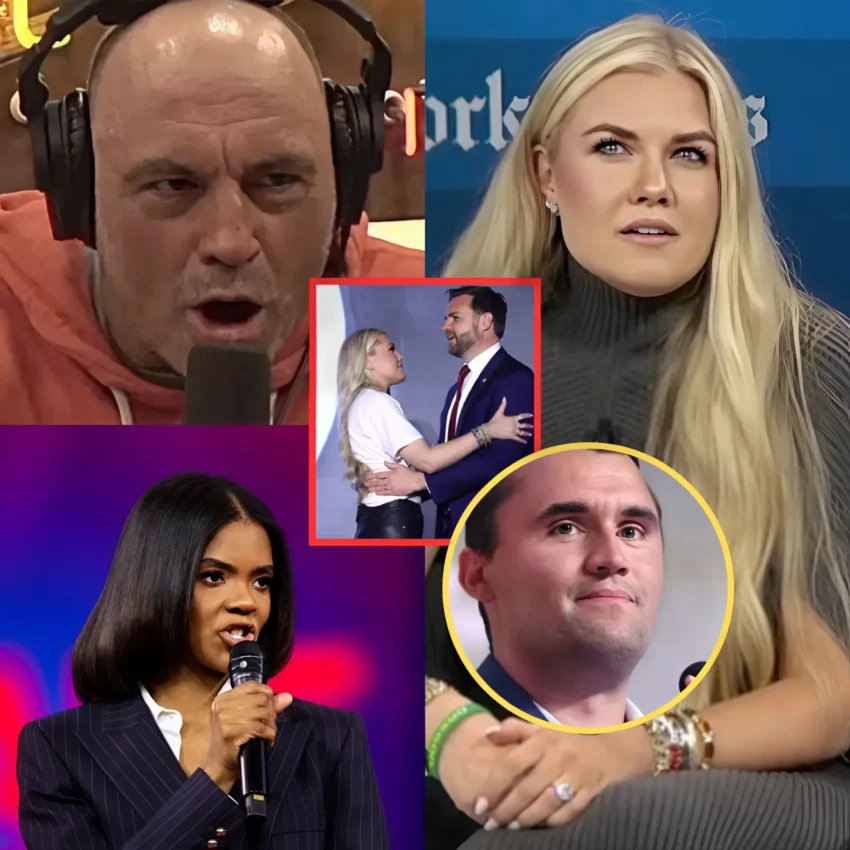
Joe Rogan’s latest discussion has pulled the Charlie Kirk story back into public view in a way that is difficult to ignore. That does not mean the conversation has produced new verified facts on its own, and it certainly does not mean every interpretation now circulating online deserves equal weight. What it does mean is that a familiar modern media pattern has appeared once again: a powerful voice with an enormous audience has reopened a public narrative that many people assumed had already settled into the background.
When that happens, attention does not return in a calm or orderly way. It returns with force, with fragments, with screenshots, with clips detached from their original context, and with millions of people bringing their own prior beliefs into the discussion. A story that once seemed fixed begins to feel fluid again. Old remarks are replayed. Forgotten reactions are reexamined. Statements that received little attention the first time are suddenly treated as central.
This is one reason the renewed interest around Joe Rogan, Charlie Kirk, and Candace Owens has drawn so much fascination. People are not only reacting to the content of the discussion itself. They are reacting to the experience of seeing a familiar public story rearranged in real time. They are watching influence operate at scale, and they are noticing how quickly a podcast conversation can alter the temperature of a broader cultural debate.
That shift in temperature matters. In the digital environment, attention is not passive. It behaves more like pressure. Once enough pressure builds, even a story that had begun to fade can surge back into timelines, group chats, livestreams, reaction videos, and comment sections. Audiences do not merely consume the renewed narrative; they participate in shaping it. They search for clips, compare interviews, quote old commentary, and build their own theories about who saw what first and who understood the significance of it earliest.
Candace Owens has become central to that part of the conversation for a specific reason. In moments like this, audiences are drawn almost irresistibly toward the idea that someone may have recognized a pattern before the rest of the public caught up. Whether that perception is fully fair or not, it carries enormous narrative power. People like stories in which an overlooked voice turns out, in retrospect, to have noticed something important while others were still treating events as ordinary, incomplete, or unremarkable.
That does not automatically validate every claim attached to that perception. It simply explains why the perception itself becomes so magnetic. Once viewers begin to feel that an earlier comment, tone, hesitation, or question might deserve a second look, the social energy around that person changes. Their old clips begin circulating with new captions. Their previous commentary acquires a different emotional charge. Audiences stop hearing those remarks as routine opinion and begin hearing them as possible signs of earlier awareness.
This is where podcast culture intersects with reputation formation. Rogan’s platform does more than generate exposure. It creates a space in which subjects can be framed as newly urgent even if the underlying facts have not changed at all. That framing effect is not trivial. Public urgency is one of the most valuable currencies in media. Once a story is perceived as urgent, people behave differently around it. They prioritize it, argue over it, share it faster, and attach more meaning to individual details.
In older media systems, a story moving back into the spotlight often required a formal trigger: a court filing, an official statement, a televised interview, or a front-page investigation. In the current media ecosystem, those triggers still matter, but they now coexist with a much looser and more volatile mechanism. A conversation on a major podcast, amplified by social media and fed into partisan or personality-driven networks, can revive a subject with astonishing speed.
The mechanics are straightforward, even if the emotional experience feels chaotic. A high-profile commentator revisits a topic. Short clips are extracted from a longer exchange. Those clips are reposted by accounts that frame them in the most compelling possible language. The language invites interpretation rather than restraint. Viewers feel they are not merely being informed but called into a puzzle. The result is a wave of participatory curiosity, which is one of the strongest accelerants in digital storytelling.
Curiosity, however, is rarely neutral once millions of people are involved. It quickly blends with identity. People who already trust Joe Rogan see the renewed discussion as validation that a neglected story deserves more scrutiny. People who already trust Candace Owens may interpret the renewed attention as proof that her earlier perspective was unfairly dismissed. Others may see the entire cycle as a case study in how attention can be reignited without producing much clarity at all.
All of these reactions can exist simultaneously, and that is part of what makes the moment so revealing. Public narratives are not single roads. They are intersections. At any given time, the same clip can function as evidence, as entertainment, as suspicion, as political ammunition, or as emotional confirmation, depending on who is watching and why. The renewed discussion around Charlie Kirk demonstrates just how many different uses audiences can find for the same media moment.
There is also a deeper reason people find this dynamic compelling. Modern audiences are intensely attuned to timing. They do not only ask what was said. They ask when it was said, who said it first, who ignored it, who repeated it later, and who now appears to have been ahead of the curve. Timing has become part of credibility. In a fragmented media world, being early can look like insight, but it can also look like guesswork until a later moment makes it appear significant.
That helps explain why so many viewers focus on Candace Owens in language that emphasizes sequence: earlier than most, before others noticed, long before the wider public understood. Those formulations are not just descriptive. They are myth-building tools. They transform commentary into foresight. They compress complicated media history into a simpler story about recognition and delay. And once that simpler story takes hold, it becomes remarkably resilient.
Yet resilience is not the same as accuracy. A media commentator can ask sharper questions than others without necessarily possessing privileged knowledge. A public figure can sound unusually confident about a topic without that confidence being vindicated in every detail. The temptation in moments of retrospective attention is to turn ambiguity into revelation. That temptation is understandable, but it should be resisted by anyone who wants a serious reading of how influence actually works.
A more grounded interpretation is still plenty dramatic on its own. Joe Rogan’s involvement matters because he commands a huge audience that is primed to treat long-form conversation as more authentic than conventional news packaging. Whether one agrees with that instinct or not, it is real. Many listeners experience podcasts as spaces where guarded institutional language falls away. They feel that they are hearing people think out loud rather than recite polished conclusions. That perception creates trust, even when the subject matter remains contested.
Trust built in that way is different from institutional trust. It is more intimate, more personality-driven, and often more durable. A listener who distrusts major outlets may still trust a familiar host’s tone, instincts, or willingness to entertain questions that others avoid. That is why a Rogan discussion can have such outsized impact. It does not need to function like a court proceeding or a newsroom investigation. It functions more like a signal flare to a large audience that believes certain subjects deserve another look.
Once that flare goes up, secondary media systems do the rest. Video channels start breaking down the conversation. Commentary accounts isolate single sentences and present them as turning points. Users who missed the original exchange encounter the story first through reaction, not through source material. By the time many people arrive, they are already stepping into a narrative frame built by others. They are told that something important has been exposed, or reexposed, before they even decide what the conversation means for themselves.
This is why language matters so much. Phrases such as back in the spotlight, impossible to ignore, or suddenly making sense are not incidental decorations. They are instructions for how audiences should feel. They convert attention into urgency and urgency into momentum. The public often believes it is merely observing a story gain traction, when in reality it is also responding to a set of rhetorical cues that make the traction feel inevitable.
The Charlie Kirk conversation illustrates another key feature of contemporary media life: stories rarely disappear completely. They enter storage. They wait in archives, clips, transcripts, thumbnails, and memory fragments. Then, at the right moment, one catalyst can pull them back into motion. The catalyst may be a new statement, a fresh interview, a viral post, or a recontextualized excerpt. The original story does not return exactly as it was. It returns wearing the meanings that have accumulated around it during its absence.
That accumulation effect makes retrospective interpretation especially powerful. Viewers are not revisiting earlier Candace Owens commentary as if they had no context. They are revisiting it with months or years of added discourse layered on top. They hear the same words differently because the environment around those words has changed. This is one of the reasons media memory is so unstable. The archive is fixed, but the interpretive frame surrounding the archive is always shifting.
A sentence spoken at one moment may sound speculative. The same sentence replayed later may sound prescient. Another statement that once seemed blunt may later be described as careful. A tone that initially felt provocative may later be rebranded as perceptive. These shifts do not necessarily reflect dishonesty on the audience’s part. They reflect the human tendency to make narrative order out of scattered information once enough time has passed.
There is also a commercial side to all of this that should not be ignored. Stories that invite retrospective decoding perform extremely well online. They offer a satisfying blend of familiarity and discovery. People recognize the names, but they feel there is still something new to uncover. That combination is ideal for platforms that reward repeat engagement. Users return to the same clips with a different emotional purpose each time: first curiosity, then comparison, then certainty, then debate.
This is one reason why the renewed conversation feels bigger than a single podcast episode. It is being sustained not only by the original discussion but by the entire ecosystem that thrives on reassembly. Every reaction channel, quote post, stitched video, and commentary thread helps keep the subject alive. The story becomes modular. Different communities take different pieces of it and use them for different ends, but all of them help extend its life.
For observers trying to understand the moment seriously, the most important question may not be whether one personality was right before another. The more useful question is how audiences decide that someone now appears to have been right earlier than everyone else. That judgment is shaped by tone, repetition, audience loyalty, cultural mood, and the need for a recognizable protagonist in any sprawling public controversy. Recognition is rarely a pure audit of facts. It is also a contest over narrative ownership.
Narrative ownership has become one of the defining struggles of the current information age. Public figures do not only compete to comment on events. They compete to become the person through whom audiences understand those events. If Joe Rogan helps reignite broad attention and Candace Owens is increasingly cast as someone who sensed something earlier, that pairing does not just animate a discussion. It redistributes symbolic authority over the meaning of the story.
Once symbolic authority shifts, downstream consequences follow. Clips gain or lose status depending on who shares them. Commentators who were once dismissed can be repositioned as central. Opponents respond not only to the substance of the debate but to the possibility that influence itself is being reassigned. The conflict then expands beyond the original topic. It becomes a struggle over credibility, memory, and who gets to frame what counts as obvious in hindsight.
Hindsight is especially dangerous because it feels cleaner than real time. In the moment, uncertainty is uncomfortable. People hesitate, contradict themselves, and miss things. Later, once the archive is available and new attention has arrived, audiences reconstruct the past as if the signals were always clear. That reconstruction can be emotionally satisfying, but it often flattens the original complexity. Media literacy requires remembering how messy a story felt before its pieces were arranged into an after-the-fact narrative.
The pressure to simplify is particularly intense when the people involved are already recognizable personalities with devoted audiences. Charlie Kirk, Joe Rogan, and Candace Owens are not anonymous participants in a neutral discussion. Each name carries prior associations, prior audiences, and prior interpretations. That means any renewed attention around them is filtered through existing loyalties and antagonisms before a fresh sentence is even fully heard.
Such preloaded contexts are one reason debates involving public figures often escalate faster than debates about institutions alone. Personalities are easier to narrate than systems. Viewers can more readily imagine one person seeing something before another than they can track the slower, less glamorous processes by which institutions frame, delay, dilute, or elevate certain stories. Personalization makes the story feel emotionally accessible, even when it obscures the broader media machinery underneath.
Still, the machinery matters. Algorithms reward content that produces strong reaction quickly. Influencers are incentivized to frame developments in high-contrast language. Audiences accustomed to suspense-driven storytelling often bring those expectations into political and cultural commentary. Under those conditions, even a relatively restrained discussion can be cut, captioned, and circulated as if it were a revelation. The platform logic pushes toward intensity whether the facts justify it or not.
This does not mean every intense reaction is manufactured. Sometimes the emotion is genuine, and sometimes a revived discussion really does help people notice gaps in the way a story was previously covered or interpreted. The critical point is that emotional authenticity and informational precision are not the same thing. A listener can honestly feel that an issue deserves renewed attention while still drawing conclusions that move far beyond what the available record supports.
That distinction is essential if one wants to evaluate the current moment without either cynicism or naïveté. It is too easy to dismiss all renewed interest as mere spectacle. It is also too easy to treat renewed interest as proof that a hidden truth is finally breaking through. Often the reality is less theatrical but more instructive. Attention is being redistributed, interpretive authority is being renegotiated, and audiences are reordering their memory of who sounded most alert at an earlier stage.
Reordering memory is one of the most underrated powers in media. Most people do not keep comprehensive records of what they thought about a topic at each stage. They rely on recollection, and recollection is highly responsive to current frames. Once a dominant narrative emerges that a certain commentator noticed something early, people begin to remember prior moments differently. What once sounded like ordinary skepticism can now feel loaded with significance.
The more often those clips are repeated, the more natural the retrospective story becomes. Repetition creates familiarity, and familiarity often gets mistaken for proof. A phrase heard ten times in a week feels authoritative not because its evidentiary value has changed, but because the mind starts to process it as part of the accepted shape of the story. This is one reason why viral attention can solidify impressions long before a more careful evaluation has occurred.
Joe Rogan’s role in this cycle is especially notable because long-form audio has a unique relationship with certainty. Unlike short television hits, podcasts often allow room for speculation, pauses, informal language, and broad associative thinking. That can be useful because it surfaces questions others may avoid. It can also be risky because audiences may confuse conversational openness with evidentiary strength. A thought explored out loud can acquire the aura of a substantiated finding once it is clipped and circulated outside its original setting.
The medium, in other words, changes the afterlife of the message. What began as an exploratory remark may later travel as a definitive statement. What sounded cautious in a full episode may look explosive in a thirty-second excerpt. The audience then reacts not to the complete conversation but to a distilled emotional version of it. The clip becomes a sharper object than the original discussion ever was.
Candace Owens’ renewed prominence in this discourse also shows how media figures can benefit from timing without controlling it. A commentator does not need to orchestrate a new cycle to become central to it. All that is required is for enough people to decide that her earlier stance now appears newly meaningful. That shift can happen organically, strategically, or somewhere in between. But once it happens, the commentator becomes part of the story in a stronger sense than before.
At that point, the public is no longer just evaluating the original subject. It is evaluating the commentator’s apparent foresight. That is an entirely different kind of assessment, and it often follows different rules. Foresight is emotionally compelling because it suggests depth, instinct, and courage under conditions where others supposedly failed. Whether those qualities are deserved in a particular case is a matter for careful evidence, but the attraction of the trope itself is undeniable.
There is something almost cinematic about retrospective vindication. It flatters the audience as well. To embrace the idea that one voice recognized the significance of a story early is also to imagine that attentive viewers can train themselves to spot future patterns sooner than the crowd. The narrative is empowering. It implies that the world is not random but legible to those willing to look carefully enough. That promise has enormous appeal in chaotic times.
Yet public life rarely rewards caution with the same intensity that it rewards narrative clarity. A careful observer might say only that a conversation has revived attention, that earlier commentary is being reinterpreted, and that audiences should distinguish between influence and verification. All of that is true, but it lacks the dramatic compression of the stronger story: one person saw it early, others missed it, and now the truth is surfacing. Simpler stories move faster.
That speed can become its own argument. People assume that because a framing spreads rapidly it must correspond to something obvious. In reality, rapid spread often reflects emotional fit more than factual solidity. A frame catches because it satisfies a need already present in the audience. In this case, the need may be for a recognizable guide through uncertainty, someone who can be cast as perceptive before the rest of the media or the public caught up.
This is why critical consumers of media should pay attention not only to the discussion itself but to the emotional architecture around it. What exactly are viewers being invited to feel? Vindication, suspicion, urgency, admiration, resentment, or relief? Those feelings are not peripheral. They are part of how the narrative secures allegiance. Understanding the emotional structure of a story often reveals more than arguing endlessly over isolated lines.
Another revealing feature of the current moment is how quickly discussion about content becomes discussion about omission. Audiences do not just ask what was said by Joe Rogan or Candace Owens. They ask what others failed to say, what established outlets failed to emphasize, or what audiences themselves failed to notice when earlier remarks first circulated. Omission is powerful because it turns absence into a narrative actor. It suggests there was a gap where attention should have been.
Sometimes that gap is real. Sometimes a story did not receive the level of scrutiny it deserved at an earlier stage. But omission can also be exaggerated into a more sweeping mythology, one in which vast numbers of people are treated as blind while a chosen few are elevated as uniquely perceptive. That mythology is seductive because it offers order, heroes, and laggards. It also reduces the complexity of public attention into a cleaner moral drama.
Moral drama has always been marketable, but digital platforms intensify its pull. They reward users for taking positions quickly and publicly. Nuance does not disappear entirely, but it struggles to compete with crisp emotional narratives that invite rapid identification. The renewed Charlie Kirk conversation is therefore not just about one case or one discussion. It is a window into how modern publics metabolize uncertainty through personalities, timing, and repetition.
In a healthier media culture, renewed attention would ideally lead to deeper sourcing, stronger context, and more disciplined distinctions between observation and inference. Sometimes that happens. More often, renewed attention produces parallel streams. One stream contains serious attempts to understand the issue. The other contains accelerated storytelling in which each fragment is assigned more certainty than it can bear. The problem is that those streams constantly interact, making them difficult for ordinary viewers to separate.
A viewer may begin with a sincere desire to understand why a story has resurfaced, then end up moving through a feed that blends genuine commentary, selective editing, emotional framing, and algorithmic amplification. By the end, what feels like independent judgment may actually be the result of dozens of subtle directional pushes. None of this requires a coordinated plan. It is simply how networked attention works under pressure.
That pressure is intensified when a revived story touches broader anxieties already present in the culture. People are primed to believe that major narratives may have been mishandled, simplified, or prematurely closed. They are therefore highly responsive to any signal suggesting that a familiar event deserves reinterpretation. Rogan’s ability to trigger that receptivity is part of his significance. He does not create the underlying mistrust, but he can channel it.
Candace Owens occupies a different but related position. She often functions, for supporters, as a figure associated with saying what others will not say or asking what others will not ask. Whether one finds that reputation persuasive or overstated, it is central to why audiences now read her earlier remarks as potentially consequential. Her public persona makes retrospective elevation easier. She fits the role that this type of narrative needs.
Role fit matters in media more than many people admit. Some voices are easier for audiences to imagine as early noticers, contrarians, or truth-tellers because those identities have been built over time. That does not mean the identity is false. It means the public encounters the new moment through an already prepared frame. When the Charlie Kirk discussion reignites and Owens is pulled back into focus, many viewers do not start from zero. They start from a script already half-written in their minds.
Scripts help audiences process complexity, but they also constrain what counts as believable. If a person is cast as the one who saw the pattern first, then ambiguous past remarks may be read generously. If another figure is cast as late, compromised, or inattentive, their earlier caution may be reinterpreted as blindness. The point is not that such judgments are always wrong. It is that they emerge through narrative sorting as much as through strict evidentiary review.
Strict evidentiary review is rarely what goes viral. What goes viral is legibility. People want to know where to place a clip, a sentence, or a personality within a larger moral and interpretive map. The success of Rogan’s renewed discussion lies partly in its ability to make the story legible again. It tells audiences that this subject is not over, that earlier material may deserve a second look, and that some voices may now appear more significant than they once did.
That is enough to restart the machinery. Once the machinery restarts, it produces its own momentum. More people comment because more people are commenting. The revived discourse becomes a social event as much as an informational one. Participation itself becomes meaningful. To weigh in is to signal attentiveness, alignment, skepticism, or independence. The story becomes a stage on which audiences perform their own identities.
Identity performance is not an incidental byproduct of digital media. It is one of its engines. Public conversations around high-profile names allow people to announce what kind of observer they believe themselves to be. Are they ahead of the curve? Resistant to manipulation? Loyal to alternative voices? Suspicious of mainstream narratives? Open to revisiting conclusions? Every shared clip and every interpretive caption can double as a declaration of self.
Once discourse takes on that function, it becomes more resilient than a simple news cycle. Even if no major new verified development appears, the conversation can persist because it is now serving social and psychological needs beyond information alone. It offers belonging, conflict, suspense, and the possibility of retrospective clarity. Those are powerful motivators, and they help explain why certain discussions return with such force.
For anyone trying to write or think responsibly about this kind of moment, discipline is crucial. It is possible to recognize the significance of Rogan’s influence, the renewed curiosity surrounding Charlie Kirk, and the growing belief among some audiences that Candace Owens noticed something earlier than others did, without converting those perceptions into unverified claims. In fact, that discipline makes the analysis stronger, not weaker.
It keeps the focus where it belongs: on how stories are amplified, how reputations are reinterpreted, and how modern audiences assign meaning under conditions of incomplete certainty. Those processes are not side issues. They are the story. The temptation to leap past them toward a grand resolution is understandable, but often the more revealing truth is in the machinery of attention itself.
That machinery is now a central force in public life. It determines what returns, what fades, what is remembered, and who gets cast as perceptive in retrospect. Joe Rogan’s latest discussion did not simply reintroduce a topic. It activated a familiar but still powerful cycle in which attention, memory, and interpretation begin feeding one another until the public feels that a once-settled story is moving again.
Whether that movement leads to deeper understanding depends on what audiences do next. If they treat renewed attention as an invitation to examine framing, chronology, and evidence more carefully, then the moment may become genuinely illuminating. If they treat it only as confirmation that a dramatic narrative they prefer must be true, then the cycle will produce heat without much light.
That choice is rarely made in a single dramatic instant. It is made in small acts of consumption: whether to watch the full exchange or only the clip, whether to distinguish suggestion from substantiation, whether to revisit earlier remarks with curiosity or with a predetermined storyline already in place. Media culture is built out of those habits. So is media distortion.
What makes the current discussion so captivating is precisely that it sits on the edge between those two possibilities. It contains enough ambiguity to invite reinterpretation and enough recognizability to sustain mass interest. It features personalities large enough to matter, language suggestive enough to spread, and a public mood receptive enough to believe that something important may have been missed earlier.
That combination is rare, and when it appears, it tends to produce the kind of narrative surge we are seeing now. Joe Rogan becomes the catalyst. Charlie Kirk becomes the central subject around which interpretation reorganizes itself. Candace Owens becomes, for many viewers, the figure whose earlier voice now appears newly charged with significance. The resulting conversation is less a fixed conclusion than a contest over how the story should now be remembered.
And perhaps that is the clearest way to understand the moment. Not as a final revelation, and not as empty noise, but as a struggle over memory, sequence, and authority in a media environment that rewards rediscovery almost as much as discovery itself. In that environment, being first, sounding early, or merely seeming to have noticed a pattern ahead of the crowd can reshape a person’s role in public imagination overnight.
That reshaping is what audiences are really responding to. They are watching more than a discussion. They are watching status move. They are watching a public story reopen and a set of familiar names slide into new positions within it. Whether those positions endure will depend on what follows. But for now, the renewed attention itself is the event, and understanding its mechanics may tell us more about modern media than any single clip ever could.