It was a quiet morning in Minneapolis, the kind of day when the chill in the air is offset by the promise of routine. Children walked to school with backpacks slung over their shoulders, parents waved from porches, and the rhythm of life moved in steady, familiar beats.
Renée Nicole Good, 37, was just another mother in the neighborhood, driving her youngest son to school before heading home to begin her day. But that morning, the ordinary would become unthinkable.
Within minutes of dropping her child off, Renée would never make it home.
A Confrontation That Ended in Tragedy
According to local authorities, a brief encounter near her Minneapolis neighborhood escalated in a way that would leave the city reeling. Renée was shot and killed by a U.S. Immigration and Customs Enforcement (ICE) officer. The agency claims the officer acted in self-defense, citing a confrontation in which they felt threatened.
Family members, friends, and community activists have questioned that narrative, arguing that the events leading up to her death remain murky. Conflicting accounts, limited video footage, and eyewitness testimonies have only deepened the sense of unease.
The street where it happened, normally quiet and unremarkable, is now etched in collective memory as the site where a mother’s life was brutally cut short.
A Life Devoted to Family
Renée Good was more than just a statistic. She was a mother of three, a beloved friend, a daughter, and a neighbor who knew everyone on her block. Those closest to her describe a woman fiercely devoted to her children, whose love for her family was evident in every gesture — from packing school lunches to helping with homework, to quiet moments of bedtime reading.
Her loss is felt not just by her immediate family, but by a community left to grapple with the unthinkable. Friends recall her laugh, her energy, and the way she made everyone feel seen. That light, extinguished in an instant, has left a void that cannot be measured.
Witness Accounts and Conflicting Stories
Eyewitnesses have provided accounts that sometimes diverge in key details. Some describe a verbal altercation that escalated quickly. Others insist Renée was calm and posed no threat. Video evidence, partially released by authorities, captures snippets of the encounter but leaves crucial questions unanswered.
Questions swirl: What prompted the officer to draw their weapon? Were alternative methods of restraint possible? How did a routine morning turn into a fatal confrontation in mere seconds?
Investigators are working to reconcile these conflicting narratives, but for the Good family, every unanswered question only compounds the grief.
The Immediate Aftermath
The news of Renée’s death spread quickly, first through neighbors, then across local and national media. Her son, unaware that his mother would not return home, faced a loss incomprehensible for a child of his age.
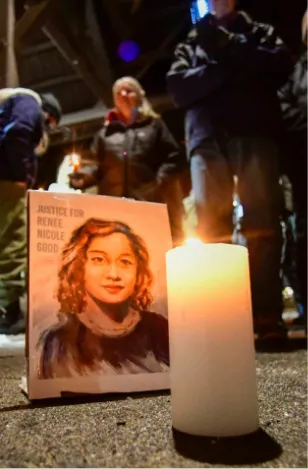
Community members gathered at the scene, laying flowers and candles along the street where she fell. Vigils were organized to honor her memory and demand accountability, while protests erupted to call attention to broader issues of law enforcement use of force and systemic inequities.
Family Describes a Mother Taken Too Soon
Renée’s relatives have spoken publicly about her warmth and dedication. Her brother, speaking through tears, described her as “someone who would give everything to protect her children. She never asked for anything in return.”
Her friends recall the countless times she supported others — from neighborhood events to personal crises. “She had a heart that held everyone,” one friend said. “And now that heart is gone.”
The impact on her children is incalculable. Experts in childhood trauma note that losing a parent suddenly, particularly in violent circumstances, can create lifelong psychological scars. Support networks have mobilized, providing counseling, schooling assistance, and emotional guidance to help the children navigate the aftermath.
National Attention and Debate
The shooting has sparked national discussion, particularly regarding ICE and other federal law enforcement practices. Advocates for civil rights and community accountability question the protocols that led to the use of lethal force. They ask whether alternatives could have been employed, and whether systemic issues contributed to a confrontation that escalated to death.
For some, the case represents a broader problem — one in which ordinary people, even mothers performing daily routines, are caught in the crossfire of law enforcement misjudgments or overreach.
Investigations Continue
Multiple agencies, including local police, ICE internal affairs, and the state’s attorney office, are investigating the circumstances surrounding the shooting. Key areas of focus include body camera footage, witness statements, and the officer’s prior conduct and training.
Autopsy reports, ballistic analyses, and forensics will provide crucial evidence. Meanwhile, legal experts emphasize that determining intent, threat assessment, and reasonableness under law are central to understanding the officer’s actions.
For the Good family, the process is slow, painstaking, and often retraumatizing. Each hearing, each new report, forces them to relive the moment when their lives were irrevocably changed.
Community Grief and Calls for Justice
Residents of Minneapolis have rallied around Renée’s family, holding vigils and organizing community dialogues about safety, accountability, and justice. Social media has amplified their calls, bringing national attention to a tragedy that might otherwise have remained a local story.
Faith leaders, educators, and civic organizations have spoken about the importance of supporting the Good family while also examining policies and practices that contributed to the tragedy.
A Mother Remembered
Even in death, Renée Nicole Good’s life continues to resonate. Friends and family emphasize her kindness, her tireless devotion to her children, and the way she made every day meaningful.
Her children will grow up knowing her through stories, photographs, and the memories she left behind. Her legacy is one of love, resilience, and the profound impact one person can have on the lives around them.
The Questions That Remain
Despite the arrest report, the video footage, and witness accounts, many questions linger: Could the tragedy have been prevented? Did fear and misjudgment escalate a brief encounter into a fatal shooting? How does the law balance self-defense claims with the loss of innocent life?
These questions fuel debates across the country, highlighting the tension between law enforcement authority and community safety.
Moving Forward
The Good family continues to seek truth and accountability. Their advocacy emphasizes not only legal justice but also the broader societal changes needed to prevent similar tragedies.
Community support, counseling for the children, and public attention have become critical elements in their journey through grief. Organizations focused on families affected by police-involved deaths have offered guidance and resources, ensuring the Good children are not left to navigate their loss alone.
A Life Cut Short, A Community Changed Forever
Renée Nicole Good’s death serves as a stark reminder of life’s fragility and the unpredictability of a single moment. One ordinary morning became a catastrophic event, forever altering the trajectory of a family and leaving a community grappling with shock, sorrow, and outrage.
The street where it happened, once quiet, will now carry the weight of memory. Flowers, candles, and photographs will mark the place where a mother fell, a place where the community pauses to remember, mourn, and reflect.
Legacy and Reflection
Even amid the grief, Renée’s life is celebrated. She was more than the tragedy that ended her days — she was a mother, a daughter, a friend, and a light in her community.
Her story has sparked dialogue, inspired advocacy, and reminded the nation of the human cost of violence. It challenges us to examine how ordinary lives can be endangered, even during everyday routines.
For the Good family, the fight for answers, justice, and policy change continues. Their hope is that future families may be spared the heartbreak they endured, and that Renée’s memory will serve as a catalyst for awareness, reform, and vigilance.
In a world that often moves too fast, the life and loss of Renée Nicole Good remind us to pause, to cherish, and to protect — especially those who are most vulnerable.
Her name will not be forgotten. Her story will continue to resonate, shaping conversations, communities, and the pursuit of justice for years to come.