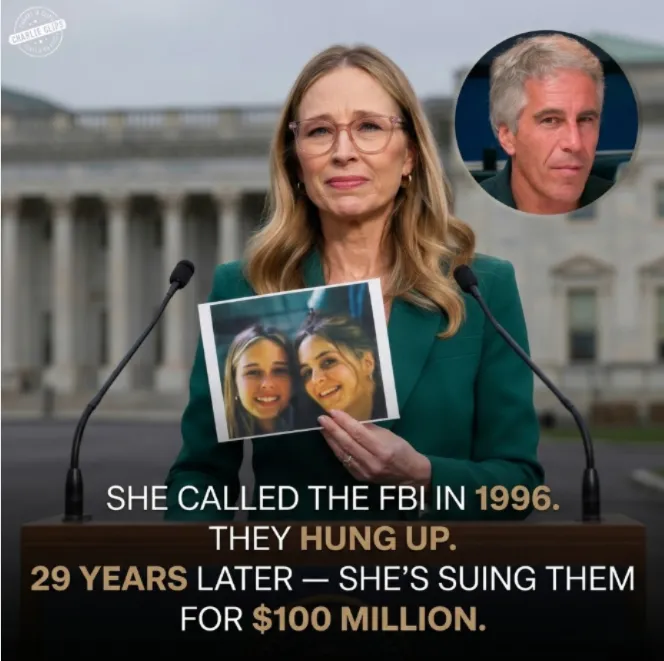
In September 1996, a phone call was made to the Miami field office of the Federal Bureau of Investigation (FBI). At the time, it appeared routine—one of countless tips received by federal authorities. Yet nearly three decades later, that call has resurfaced as a potentially pivotal moment in one of the most notorious criminal cases in modern American history.
The caller identified herself as a professional artist. She alleged that Jeffrey Epstein had stolen photographs of her underage sisters and described disturbing behavior she claimed to have witnessed inside his Manhattan residence. The caller was Maria Farmer, one of the earliest known accusers of Epstein.
According to Farmer, nothing came of the report. There was no follow-up, no confirmed case file, and no visible investigation. For years, her account circulated without official documentation to support it, leading some to question whether the report had ever been formally recorded.
That changed in December 2025, when the U.S. Department of Justice released a document dated September 3, 1996. The record described a complaint made to the FBI involving Epstein and alleged misconduct with minors. The complainant was identified only as “a professional artist,” but Farmer’s legal team later confirmed that the details aligned with her longstanding claims.
In interviews following the disclosure, Farmer expressed a mix of relief and grief. “I feel redeemed,” she said. “I’m finally vindicated. And I’m devastated about all the other girls who were harmed because nothing was done.”
The rediscovery of the 1996 complaint has renewed scrutiny of the timeline surrounding Epstein’s case. It was not until the mid-2000s that a separate investigation in Palm Beach, Florida, began uncovering the scope of the alleged abuse. That inquiry revealed dozens of potential victims and evidence suggesting a broader pattern of misconduct.
Federal authorities eventually became involved, but the outcome sparked widespread controversy. Epstein reached a plea agreement that resulted in a relatively lenient sentence, including work-release privileges. Critics have long argued that the deal failed to reflect the severity of the allegations and undermined public trust in the justice system.
Now, the resurfaced document is at the center of new legal action. A group of 12 women has filed a lawsuit seeking $100 million in damages from the FBI. The plaintiffs argue that the agency’s failure to act on early warnings allowed the abuse to continue for years.
The case is built on claims of negligence, asserting that authorities did not adequately investigate credible information. However, legal experts caution that lawsuits against federal agencies are complex, often involving issues such as sovereign immunity and high standards for proving liability.
Another key point of controversy is the absence of the 1996 complaint from a 2020 internal FBI review of its handling of Epstein-related allegations. That review had already been criticized for gaps and lack of transparency. The omission of the newly revealed document has intensified questions about whether it was overlooked, mishandled, or deliberately excluded.
So far, no clear explanation has been provided.
Beyond the legal arguments, the case has reignited a broader debate about institutional accountability. Advocates for victims argue that early warnings—especially those involving powerful individuals—are too often dismissed or insufficiently investigated. They say such failures can enable long-term patterns of abuse.
Others note that any retrospective judgment must consider the context of the 1990s, when systems for documenting and processing tips were less advanced than today. Even so, the central question remains difficult to ignore: what might have happened if the 1996 report had been fully investigated?
For Maria Farmer and other accusers, the issue is deeply personal. It is not only about legal responsibility, but also about recognition and the long-term consequences of being unheard. The validation of her account comes with the painful realization that earlier action might have prevented further harm.
As the lawsuit moves forward in federal court, pressure is mounting for additional investigations and possible congressional inquiries. Lawmakers and advocacy groups are calling for greater transparency and accountability in how such cases are handled.
Nearly 30 years after a seemingly overlooked phone call, a single document has reopened unresolved questions and reshaped the narrative. As legal proceedings continue, the case stands as a stark reminder of the importance of early intervention—and the lasting consequences when warnings go unheeded.