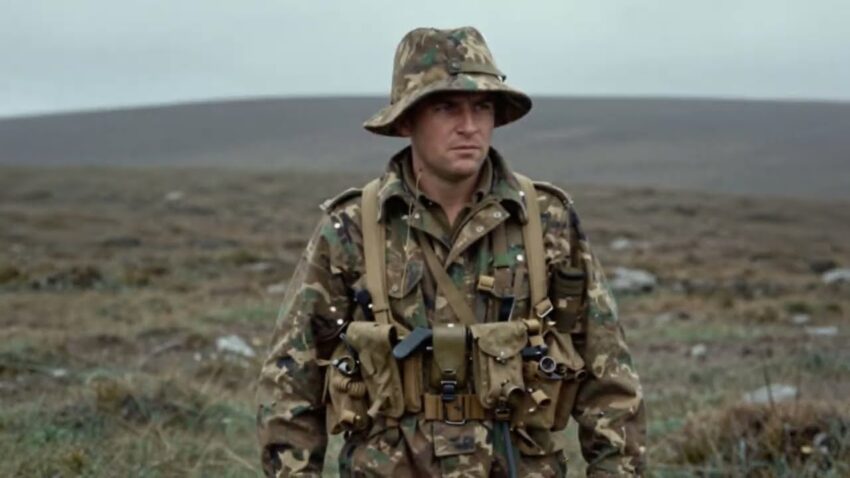
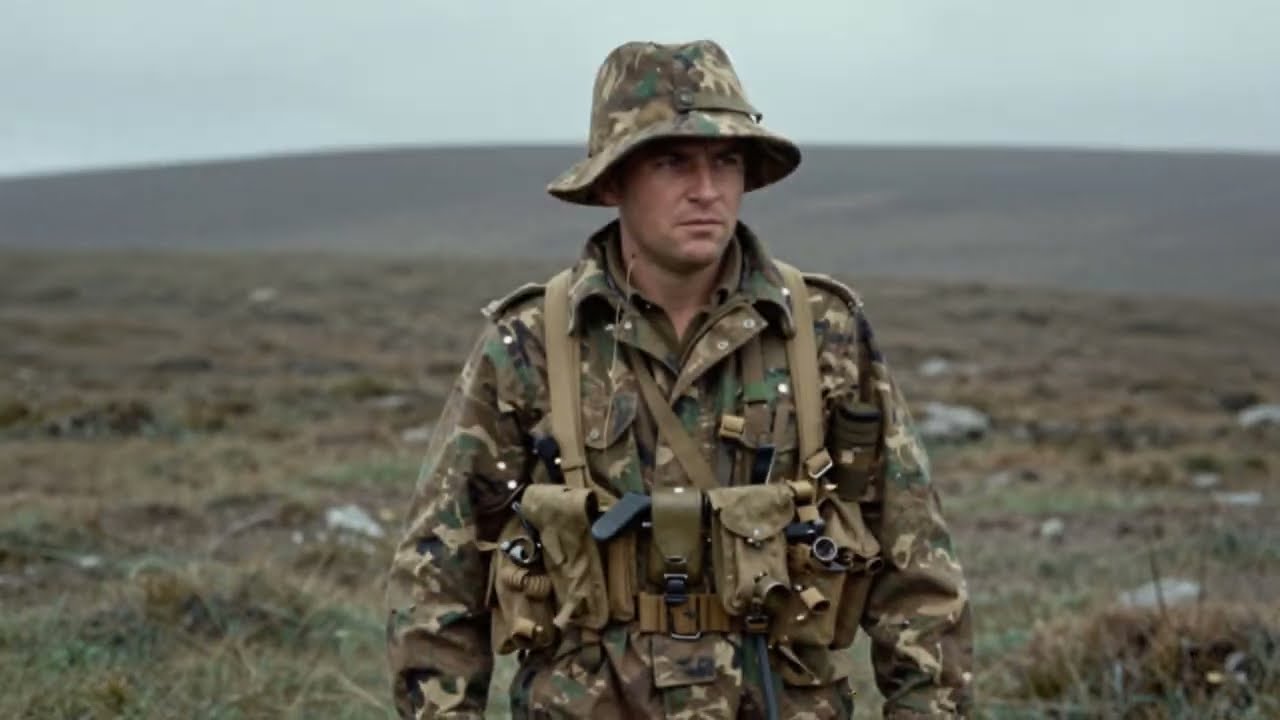
In December 1942, under a moonless sky off the French coast, a handful of Royal Marines slipped from a submarine into icy water. Their mission sounded improbable even by wartime standards: paddle folding kayaks more than 70 miles up enemy-controlled waterways, infiltrate the heavily guarded port of Bordeaux, plant explosives on German ships, and escape across occupied France on foot.
Of the men who launched that night, only two would survive.
The operation—later known as Operation Frankton—became one of the most daring raids of the Second World War. While the physical damage to German shipping was limited, the psychological impact was profound. The idea that a small team could strike deep inside a fortified harbor using nothing but stealth and endurance forced German forces to divert thousands of troops to coastal defense. It was a turning point that showcased a different kind of warfare—one built not on overwhelming force, but on precision, surprise, and resilience.
These men were not part of the more widely known Special Air Service (SAS). They belonged to a lesser-known unit that would go on to build a formidable reputation: the Special Boat Service (SBS).
The origins of the SBS trace back to 1940, after Britain’s retreat from Dunkirk left its military reeling. Amid the uncertainty, a Royal Marines officer proposed an unconventional idea: small teams using canoes to infiltrate enemy territory, sabotage ships, and gather intelligence. Initially dismissed, the concept proved its worth when he demonstrated how easily a single paddler could board a warship undetected. Soon after, the SBS was born.
From the beginning, the unit operated in environments few others could endure. Early missions across the Mediterranean saw SBS teams launched from submarines to raid enemy-held islands, destroy infrastructure, and gather intelligence critical to Allied operations. But it was their willingness to attempt what others deemed impossible that set them apart.
One figure who embodied this spirit was Anders Lassen, a Danish volunteer who joined British forces after his homeland fell to Nazi occupation. Serving with the SBS, Lassen became one of the most effective and decorated special operations soldiers of the war. Known for leading from the front, he carried out daring raids across occupied Europe, often overwhelming enemy positions with speed and aggression that made small teams appear much larger.
Lassen was killed in 1945 during a mission in northern Italy, just weeks before the war’s end. He was posthumously awarded the Victoria Cross, becoming the only member of the SAS or SBS to receive Britain’s highest military honor.
What distinguished the SBS from other elite units was not simply courage, but capability. While both the SBS and SAS share a brutal selection process—where fewer than 10 percent of candidates succeed—the SBS demands an additional level of specialization. Candidates must undergo advanced maritime training that includes long-distance diving in near-zero visibility, underwater navigation, and covert beach reconnaissance.
These operations often rely on closed-circuit rebreathers—devices that allow divers to remain undetected underwater. However, the equipment comes with risks. Malfunctions can expose operators to dangerous chemical reactions, making already hostile conditions even more perilous. Combined with freezing water, strong currents, and total darkness, the underwater environment becomes as much an enemy as any opposing force.
This ability to operate beneath the surface gives the SBS a unique strategic advantage. While the SAS is renowned for its effectiveness on land, the SBS can approach targets from the sea, strike with precision, and disappear without a trace.
That capability has been demonstrated repeatedly in modern conflicts. During the Falklands War in 1982, SBS teams were deployed ahead of the main British force to conduct reconnaissance, map minefields, and secure landing zones. Their work ensured that amphibious troops could land without facing immediate ambush.
In the Gulf War, SBS operators carried out deep-penetration missions to disrupt Iraqi communications and mislead enemy forces about the direction of coalition attacks. By creating the illusion of amphibious assaults, they forced Iraqi commanders to divert resources away from critical fronts.
More recently, in Afghanistan, SBS units have been involved in high-risk urban combat operations, including assaults on fortified insurgent positions. These missions, often conducted in close coordination with allied forces, highlight the unit’s adaptability—capable of shifting from underwater infiltration to intense close-quarters battle.
Despite their extensive history, much of the SBS’s work remains classified. Unlike the SAS, whose operations have occasionally been thrust into the public eye, the SBS operates largely in silence. Their motto, “By Strength and Guile,” reflects this dual nature—combining physical endurance with strategic deception.
The comparison between the SBS and SAS is not a question of which unit is tougher. Both represent the highest levels of military excellence. The difference lies in their domain. The SAS dominates on land; the SBS extends that reach into one of the most unforgiving environments on Earth.
In the freezing dark beneath the surface, where visibility vanishes and survival itself is uncertain, the SBS has carved out a reputation that continues to endure—one built not on recognition, but on results few ever witness.