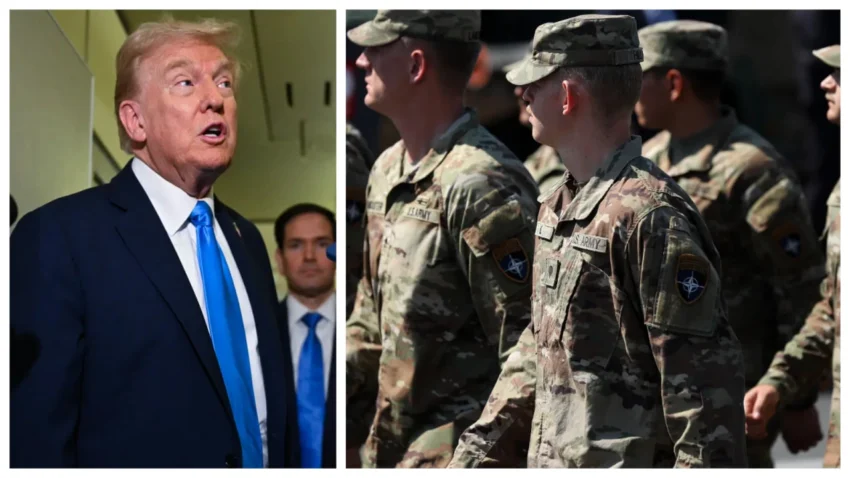
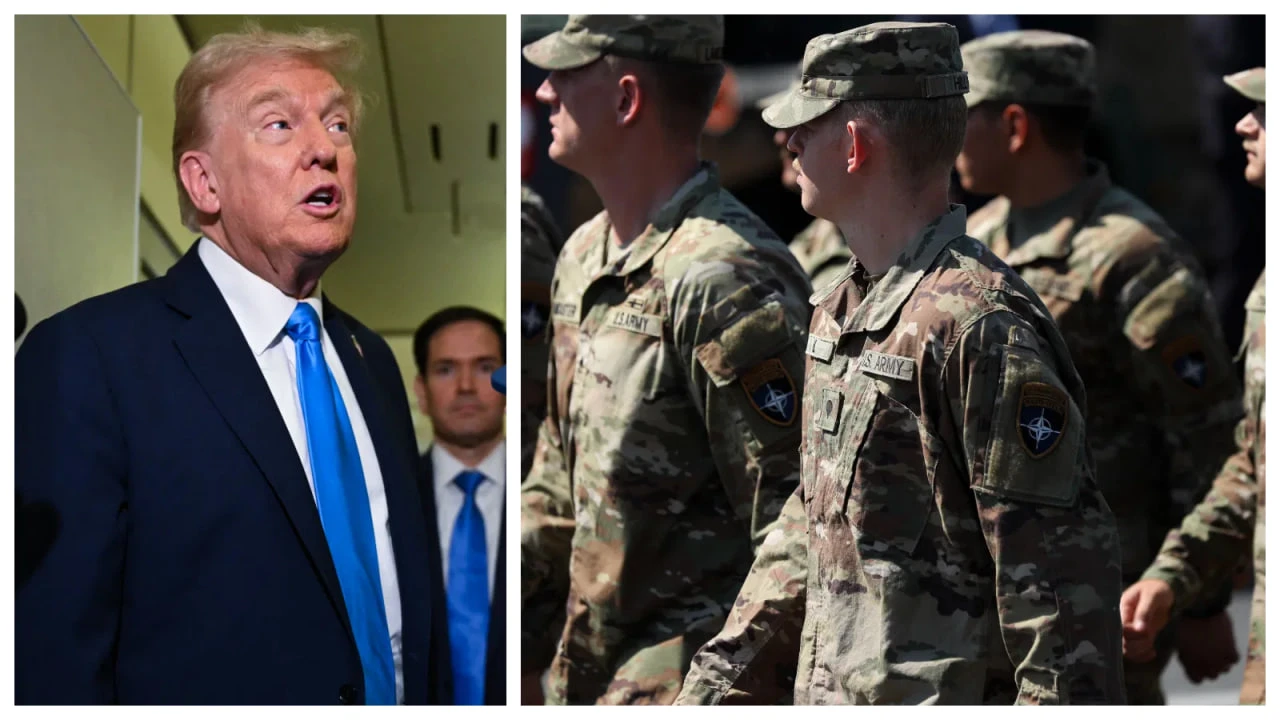
The “mystery man” behind a massive donation to be used to pay U.S. troops during the “Schumer Shutdown” has been identified.
Billionaire businessman Timothy Mellon — heir to one of America’s most storied banking dynasties — has been named as the mystery donor, according to a Saturday report.
The reclusive 83-year-old, grandson of industrialist and former Treasury Secretary Andrew Mellon, was revealed as the source of the funds in a New York Times report.
President Donald Trump had announced earlier this week that “a friend” who “loves the military and loves the country” had stepped up to cover the cost of military salaries while Congress remained deadlocked on a budget, The New York Post reported.
En route to Asia on Friday night, Trump said the donor had requested anonymity but called him “a great gentleman” and “a great patriot.”
“The request for anonymity was pretty unusual in the world I come from,” Trump said. “He just wanted to make sure our troops got paid.”
The White House declined to comment on the donor’s identity and referred questions to the Department of War and the Treasury Department, both of which did not immediately respond to requests for comment.
Mellon, who lives a reclusive life in Wyoming, could not be reached by The Post. Forbes estimates the Mellon family’s net worth at around $14 billion.
The Mellon family fortune dates back more than a century to Andrew Mellon, who served as Treasury Secretary from 1921 to 1932 and played a central role in shaping U.S. economic policy during the 1920s. He later founded the National Gallery of Art in Washington and helped fund what would become Carnegie Mellon University in Pittsburgh.
Timothy Mellon, a longtime Trump supporter, previously made headlines in 2024 when he donated $50 million to the pro-Trump super PAC Make America Great Again Inc. — just one day after Trump’s fraud conviction in New York.
His most recent $130 million donation, however, raises potential legal questions.
Pentagon spokesman Sean Parnell confirmed that the Department of War accepted Mellon’s contribution “on the condition that it be used to offset the cost of service members’ salaries and benefits.”
But under the Antideficiency Act, federal agencies cannot spend money that has not been appropriated by Congress, even if the funds are privately donated. That means the Pentagon may be unable to use Mellon’s money until the shutdown ends.
“The donation was made on the condition that it be used to offset the cost of service members’ salaries and benefits,” Parnell said, adding that the matter is under legal review.
Earlier this month, Trump had ordered Defense Secretary Pete Hegseth to “use all available funds to get our troops paid” despite the shutdown. The Pentagon later said it was drawing from “leftover research and development funds” to meet payroll temporarily.
The Senate voted 54–45 on Thursday against a stand-alone measure to fund military pay during the shutdown, with Democrats arguing that partial funding would reduce pressure to reopen the government fully.
Trump blasted the decision, saying troops “should never be used as leverage in a political fight.”
“I am using my authority as Commander in Chief to direct our Secretary of War, Pete Hegseth, to use all available funds to get our troops paid on October 15th,” Trump wrote on Truth Social.
While the Pentagon scrambles to determine how to handle Mellon’s extraordinary donation, the gesture has already made waves in Washington — both for its patriotism and its potential to test the limits of executive spending power.
As one senior defense official told The Post, “This is the first time in modern history that a private citizen has tried to cover military payroll during a shutdown. It’s uncharted territory.”
What began earlier this month as a viral White House jab at Rep. Ilhan Omar (D-MN) has now turned into a broader campaign offensive, with President Donald Trump doubling down on his criticism of the Somali-born congresswoman and the Somali refugee community in the United States.
Omar said during an October appearance on The Dean Obeidallah Show that she was not worried about losing her U.S. citizenship or being sent back to Somalia, where she was born.
“I have no worry, I don’t know how they’d take away my citizenship and like deport me,” Omar said. “But I don’t even know why that’s such a scary threat. I’m not the 8-year-old who escaped war anymore. I’m grown, my kids are grown. I could go live wherever I want.”
On Nov. 10, the White House posted on X a 2024 photo of Trump waving from a McDonald’s drive-thru window, replying to a clip in which Omar said she was unconcerned about being deported.
The photo — taken during a campaign stop in Pennsylvania — quickly circulated online and was widely interpreted as a taunting “good-bye” message aimed at the Minnesota lawmaker.
Now, the feud has reignited. Speaking to reporters aboard Air Force One, Trump referenced the allegation that Omar had entered the U.S. through a fraudulent marriage.
“She supposedly came into our country by marrying her brother,” he said. “If that’s true, she shouldn’t be a congresswoman, and we should throw her the hell out of the country.”
The president also broadened his remarks to criticize Somali immigration overall.
“Somalis have caused us a lot of trouble, and they cost us a lot of money,” Trump said. “What the hell are we paying Somalia for? We have Ilhan Omar who does nothing but complain about our Constitution and our country! We’re not taking their people anymore — in fact, we’re sending them back.”
Trump has often accused Omar of being “anti-American,” previously telling her and other progressive “Squad” members to “go back” to their “broken and crime-infested countries.” Omar responded earlier this month by calling Trump a “lying buffoon” and saying his story about Somalia’s president refusing to take her back was fabricated.
The White House has signaled that it will not walk back the president’s latest statements. A senior aide said Trump was “reminding voters that America’s generosity should never be repaid with contempt.”
Omar’s family fled Somalia’s civil war in 1991 and spent several years in a Kenyan refugee camp before settling in the United States. She was elected to Congress in 2018, becoming one of the first Muslim women and the first Somali-American to serve in the U.S. House of Representatives.
The renewed confrontation underscores the political tension between Trump and radical members of the “Squad.” It comes amidst growing concerns about immigration policy and the vetting of immigrants in the aftermath of an Afghan refugee’s shooting of two National Guard members over the Thanksgiving holiday.