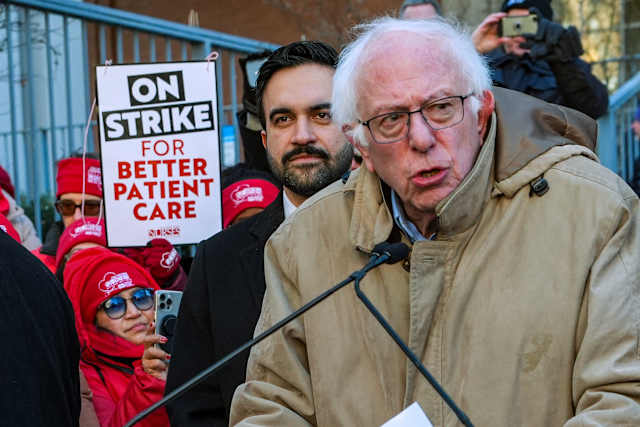
A powerful wave of pro-labor energy surged through a recent “Union Now” rally, where Senator Bernie Sanders and New York City mayoral candidate Zohran Mamdani delivered fiery speeches calling for a renewed era of worker empowerment in the United States.
The event, which drew a large and enthusiastic crowd, became a focal point for discussions about wages, labor rights, and economic inequality. With chants, signs, and passionate supporters filling the venue, the rally underscored a growing movement aimed at strengthening unions and expanding protections for workers across industries.
Sanders, a longtime advocate for labor rights, took center stage with a message that blended urgency and optimism. He argued that the American economy has increasingly favored large corporations at the expense of working people, and he called for a fundamental shift in priorities.
“For decades, the working class of this country has been left behind,” Sanders said. “That has to change—and it will change when workers stand together.”
His remarks focused on familiar themes that have defined his political career: raising the minimum wage, ensuring universal healthcare, and protecting the right to organize. Sanders emphasized that unions are essential not only for improving wages and benefits but also for preserving democracy itself.
“Real democracy is not just about voting,” he added. “It’s about having power in your workplace and your community.”
Mamdani, a rising progressive voice in New York politics, echoed many of Sanders’s points while bringing a local perspective to the stage. As a candidate for mayor, he framed labor issues as central to the future of New York City, particularly as workers continue to grapple with high living costs and economic uncertainty.
“We cannot build a just city without strong unions,” Mamdani said. “Workers deserve dignity, security, and a real voice in the decisions that shape their lives.”
He also highlighted the importance of organizing across diverse communities, emphasizing that labor rights intersect with issues such as housing, healthcare, and racial justice. His speech drew strong applause, particularly from younger attendees who see him as part of a new generation of progressive leadership.
The rally comes at a time of renewed interest in organized labor across the United States. In recent years, unionization efforts have gained momentum in sectors ranging from retail and technology to education and healthcare. Workers are increasingly demanding better pay, improved working conditions, and a greater say in corporate decision-making.
Supporters at the event described the rally as both inspiring and necessary. Many said they felt energized by the message and hopeful about the potential for change.
“This is about standing up for ourselves,” one attendee said. “For too long, workers have been told to accept less. That’s starting to change.”
However, the event also highlighted ongoing divisions over labor policy. Critics argue that some proposals associated with the pro-union movement could have unintended economic consequences, such as increased costs for businesses and potential impacts on job creation. They caution that reforms must strike a balance between supporting workers and maintaining economic competitiveness.
Despite these debates, the enthusiasm at the rally was unmistakable. Speakers and attendees alike emphasized the importance of collective action, with repeated calls for workers to organize, vote, and advocate for change.
Social media quickly amplified the event’s impact, with clips of Sanders and Mamdani’s speeches circulating widely. Supporters praised their messages, while critics questioned the feasibility of their proposals—turning the rally into a broader national conversation.
Political analysts note that events like this reflect a shifting landscape in American politics. As economic inequality remains a central issue, candidates and leaders are increasingly focusing on labor rights as a key part of their platforms.
For Sanders, the rally represents a continuation of decades of advocacy. For Mamdani, it serves as an opportunity to build momentum and connect with voters as he seeks higher office. Together, their appearance signals a shared commitment to advancing a pro-worker agenda.
In conclusion, the “Union Now” rally stands as a vivid example of the energy and urgency surrounding labor issues in today’s political climate. With powerful speeches, enthusiastic crowds, and a clear call to action, the event has added new momentum to the ongoing push for workers’ rights.
Whether this momentum will translate into lasting policy changes remains to be seen. But for those in attendance—and for many watching from afar—the message was clear: the fight for worker power is far from over, and its voices are only growing louder.