Washington is no stranger to political theater. Hearings come and go, often following a familiar script of prepared remarks, deflections, and procedural exchanges. But on this day, something shifted—something that cut through routine and forced a moment of raw confrontation between power and those who have long felt ignored by it.
At the center of that moment were survivors of Jeffrey Epstein’s trafficking network.
When they were asked to stand, the room changed. What had begun as another oversight hearing suddenly became something far more personal. The distance between policy and human consequence collapsed. Lawmakers were no longer speaking about files, redactions, or processes—they were faced with the people behind those words.
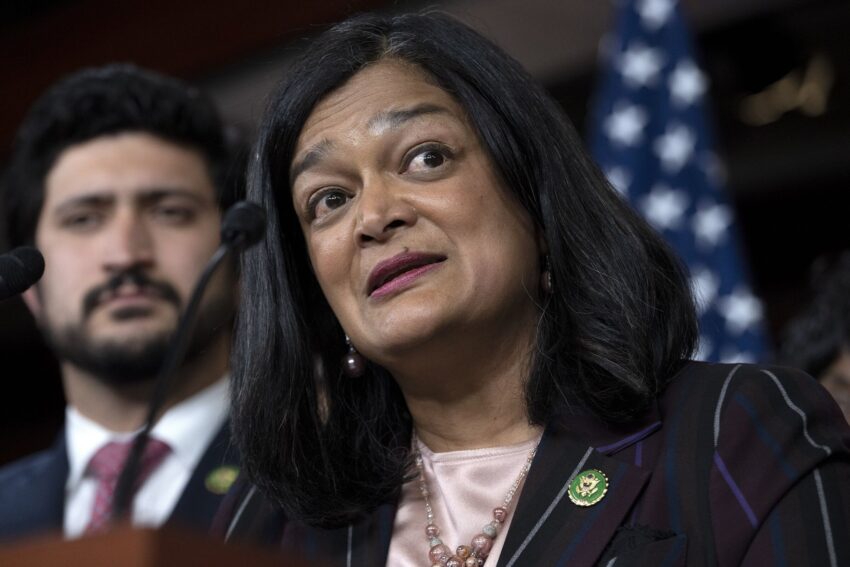
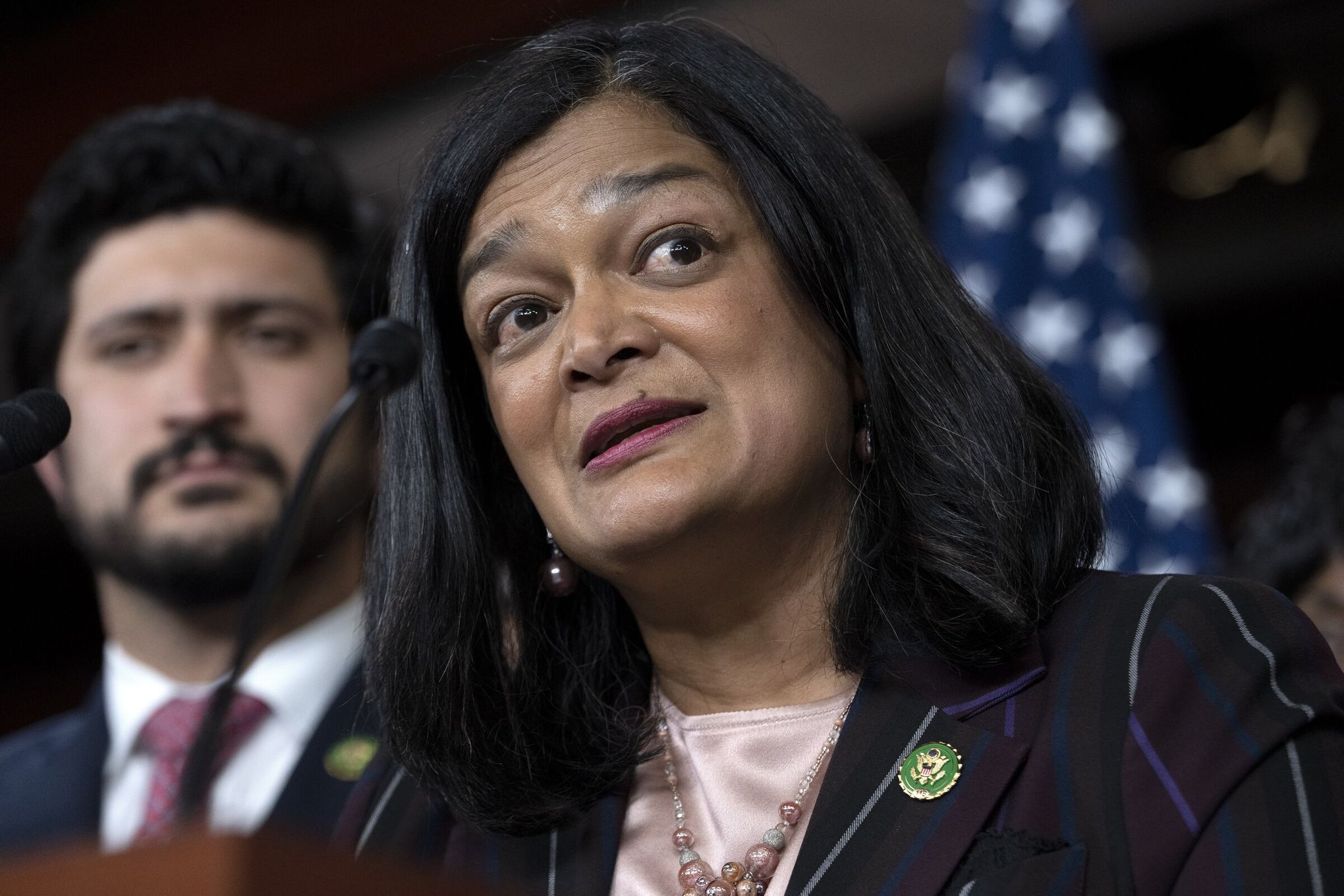
Representative Pramila Jayapal seized that moment.
Rather than focusing on technical arguments, she directed attention to the survivors seated behind the Attorney General. Her message was clear: this was not just about documents or procedures—it was about whether those most affected by the Epstein case were being treated with dignity and respect.
Jayapal’s argument rested on a stark contrast. Congress had mandated transparency in identifying perpetrators connected to Epstein’s network, while ensuring the protection of survivors’ identities. Yet, according to concerns raised during the hearing, that balance may have been reversed.
Some information tied to powerful individuals remained redacted, while sensitive details related to survivors were allegedly exposed in ways that raised serious ethical questions. If true, this would represent a troubling inversion of justice—where those with influence remain shielded, and those already harmed face further vulnerability.
To underscore her point, Jayapal moved beyond rhetoric. She asked the survivors in the room to stand if they were willing. Then, she asked them to raise their hands if they had not yet been contacted by the Department of Justice regarding the handling of their information.
That moment defined the hearing.
It was no longer abstract. It was visible. Human. Immediate.
The image of survivors standing—physically present, yet still seeking acknowledgment—quickly resonated beyond the chamber. It captured a tension that statistics and reports often fail to convey: the gap between institutional responses and personal experience.
Jayapal then posed a direct question to Attorney General Pam Bondi: would she turn to the survivors and offer an apology—not for Epstein’s crimes themselves, but for how the system may have failed them in its handling of related information?
It was a simple request. And in politics, simple questions can be the hardest to answer.
Bondi did not issue the apology. Instead, she responded with broader explanations, referencing processes and previous administrations. While such responses may align with standard political practice, in that moment they appeared to sidestep the emotional weight of the request.
Jayapal pressed the issue, emphasizing that responsibility lies not in the past, but in the present. Her insistence highlighted a deeper tension within the hearing: the difference between legal accountability and moral acknowledgment.
As the exchange continued, the hearing began to shift back toward procedural ground. Rules were invoked. Time limits were enforced. The structure of the institution reasserted itself.
But something had already changed.
The image of survivors standing could not be undone. It lingered—both in the room and far beyond it, amplified through media coverage and public reaction. For many viewers, that moment became the defining takeaway, overshadowing the technical details that followed.
Reactions have been divided.
Supporters of Jayapal argue that she gave voice to individuals who are too often treated as secondary to institutional concerns. They see her actions as a necessary challenge to systems that can appear detached from the people they are meant to serve.
Critics, however, view the exchange as a form of political staging—an emotional appeal designed to pressure an official in a complex legal context. They argue that hearings are not the place for symbolic gestures that may oversimplify nuanced issues.
Both perspectives reflect a broader debate about how justice is pursued and perceived.
At its core, the moment raises enduring questions: How should institutions respond to those they have failed? Is procedural correctness enough, or is there a need for visible acknowledgment? And what role does public perception play in shaping accountability?
The Epstein case, long marked by its complexity and controversy, continues to evoke these questions. It is not only about what happened, but about how systems respond—before, during, and after the facts emerge.
For many, the case still feels unresolved. Each new development is viewed not in isolation, but as part of a larger pattern—one that tests trust in institutions and their willingness to confront uncomfortable truths.
In that context, the hearing was more than a political event. It was a moment of reflection on the relationship between power and responsibility.
And perhaps most importantly, it was a reminder that behind every file, every decision, and every debate, there are individuals whose experiences cannot be reduced to procedure.
As the chamber returned to order and the hearing moved on, one thing remained clear: the silence that followed the request for an apology spoke as loudly as any words.
And for many watching, it raised a question that will not easily fade—what does accountability truly look like when those most affected are standing right in front of it?