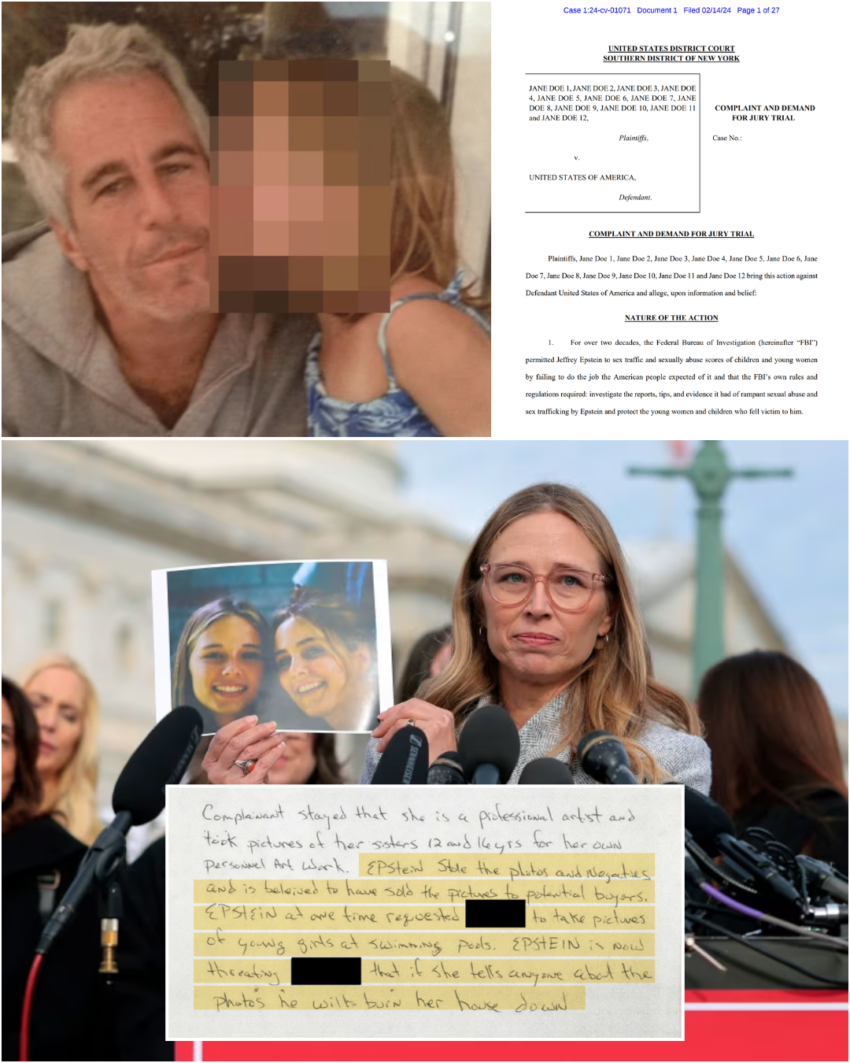
Nearly three decades after the first warning about Jeffrey Epstein reached federal authorities, twelve women are now taking an extraordinary step: suing the Federal Bureau of Investigation itself.
Their claim is not that the agency failed to catch Epstein quickly enough. Instead, they allege something far more troubling — that federal investigators knew about serious allegations as early as 1996 and did nothing for years.
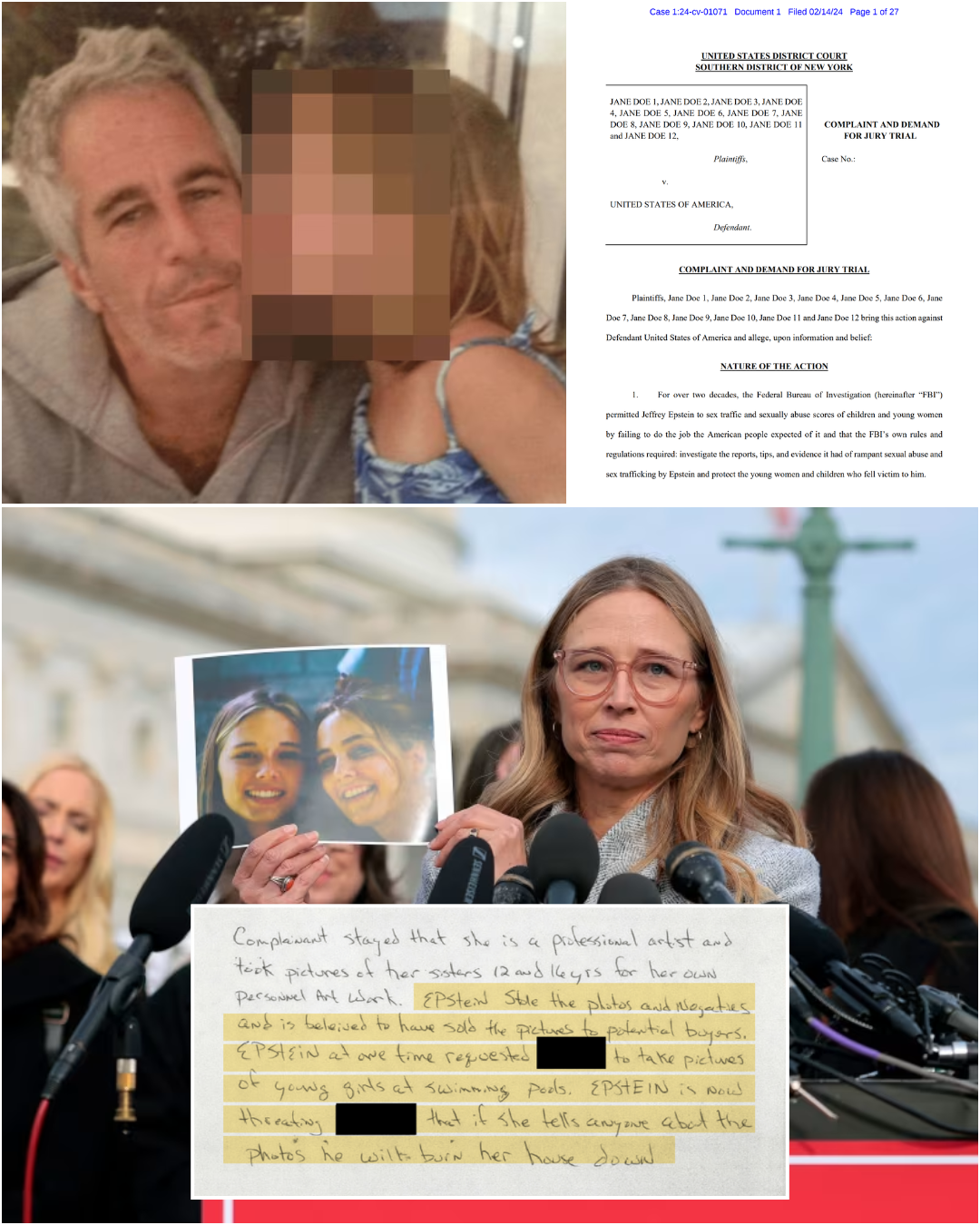
At the center of the case is the story of Maria Farmer, an artist who once worked for Epstein as an art consultant. In August 1996, Farmer reported to police that she had been sexually assaulted by Epstein and his associate Ghislaine Maxwell. She also claimed to have seen disturbing photographs of young girls inside Epstein’s Manhattan mansion.
Police advised her that the case involved federal crimes and suggested she contact the FBI. Farmer says she did exactly that.
According to documents later released by the U.S. Department of Justice, an FBI file dated September 3, 1996 logged her complaint and classified the case as “child pornography.” The document confirms that federal agents were aware of the allegations.
Yet the case did not move forward.
For years afterward, Epstein continued operating his network — recruiting and abusing young women and minors across multiple locations, including New York, Florida, New Mexico, and the U.S. Virgin Islands. Many victims say they never reported what happened because they believed no one would believe them.
Others, like Farmer, did report.
But according to the lawsuit filed in 2024 in federal court in New York, those early warnings were ignored.
The complaint argues that from 1996 to 2005, the FBI received multiple reports and tips about Epstein’s alleged trafficking of young women. Still, a formal federal investigation was not opened until 2006, after the Palm Beach Police Department uncovered dozens of victims while investigating a report involving a 14-year-old girl.
That investigation revealed a pattern: young girls were allegedly recruited to Epstein’s Palm Beach mansion for so-called “massages” that turned into sexual encounters in exchange for money. By the time detectives finished interviewing witnesses, they had identified around 40 victims.
Federal investigators eventually became involved. However, in 2008, Epstein reached a controversial plea agreement negotiated by then-federal prosecutor Alexander Acosta.
The deal allowed Epstein to plead guilty to state charges and serve a relatively short sentence in a county jail while avoiding federal prosecution. The agreement also granted broad immunity to potential co-conspirators — a provision that later drew widespread criticism.
After the plea deal was signed, the FBI closed its investigation.
According to the women now suing the government, that decision allowed Epstein’s operation to continue for years. Some plaintiffs say they were trafficked and abused well after 2008, even while Epstein was a registered sex offender.
The lawsuit accuses federal authorities of failing to act despite having credible evidence, including victim testimony and documentation gathered during earlier investigations.
The plaintiffs are seeking $100 million in damages under the Federal Tort Claims Act, arguing that the government’s inaction enabled further abuse.
The case has also revived questions about how the Epstein investigation unfolded inside federal agencies. In 2025, newly released documents confirmed the existence of the original 1996 FBI report that Farmer had described for decades — evidence that many observers say strengthens her account.
Farmer’s attorney has called for a broader investigation into how the document was handled and why it was not included in earlier internal reviews.
Meanwhile, the lawsuit itself has faced legal hurdles. The women involved filed the case anonymously as “Jane Does,” but a federal judge initially denied their request to proceed without revealing their identities, forcing them to refile their motion.
Despite those obstacles, the case remains active in federal court.
For many observers, the lawsuit raises larger questions about institutional accountability. Critics say the Epstein case reflects a troubling pattern in which early warnings about powerful figures were overlooked or delayed.
Supporters of the plaintiffs argue that uncovering the full timeline — who knew what, and when — is essential to understanding how Epstein’s crimes continued for so long.
Nearly thirty years after the first complaint reached federal investigators, that question remains unresolved.
And for the twelve women pursuing the lawsuit, the goal is not only compensation but answers: why the warnings were there — and why no one acted when they first appeared.